Meet the Real You
Meet the Real You
Youth Substance-Use Prevention Campaign · Bilingual (English / Spanish) Riverside University Health System – Behavioral Health
Youth Substance-Use Prevention Campaign · Bilingual (English / Spanish) Riverside University Health System – Behavioral Health
My Role
UX Researcher · Campaign Designer · Visual Designer
Organization
Civilian Agency
Timeline
2023
Methods
· Semi-structured interviews
· Focus groups
· Stakeholder interviews
· Thematic analysis
Focus
· Behavior change
· Bilingual outreach
· Youth public health
Background
Riverside County was in a fentanyl crisis. Youth overdose deaths were rising. And the prevention campaigns meant to help weren't landing, not because young people didn't care, but because the messaging didn't feel like it was made for them.
I was brought in to find out why, and to design something that would actually work.
The Challenge
Riverside County's youth substance misuse rates were climbing despite existing prevention efforts. Nearly 1 in 8 teenagers reported illicit substance misuse, and overdose deaths among 15 to 24 year olds, particularly from fentanyl, remained alarmingly high. Underserved and lower-income Latino communities were disproportionately impacted.
The mandate was clear: understand why current messaging was failing, and redesign it to resonate. The constraints were real: public-sector budget, compressed timelines, and the need to serve a predominantly bilingual, bicultural community. Not just translate materials,
but design for cultural context from the ground up.
My Approach
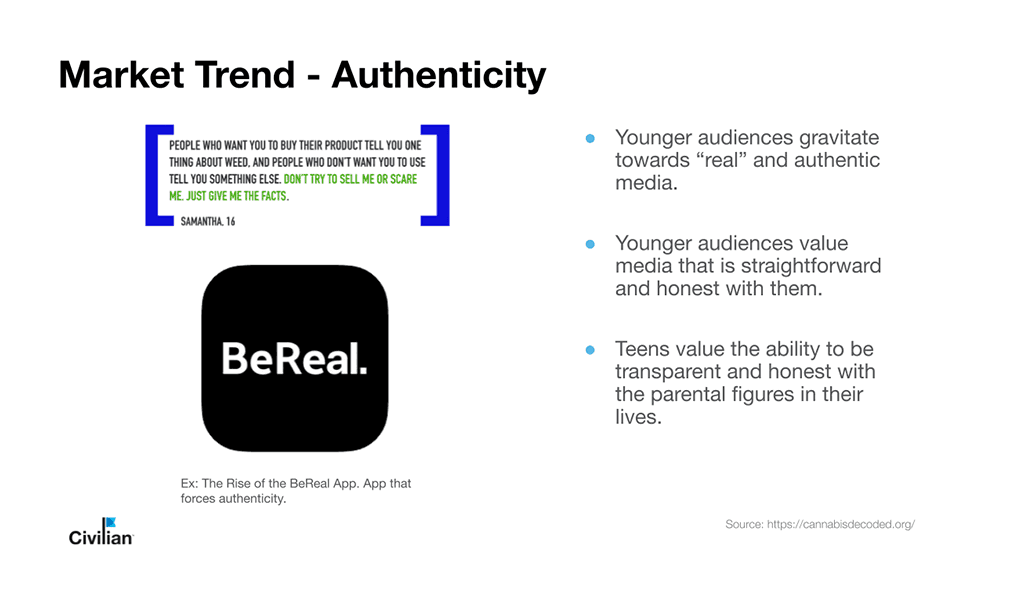
1. Youth don't reject risk — they reject inauthenticity. Low engagement wasn't apathy. It was a response to messaging that felt generic, institutional, and disconnected from real life. Fear-based narratives were actively dismissed. Young people were paying attention,
just not to content that didn't feel honest.
2. Identity is more motivating than fear. Framing substance use as something that could dilute passions, relationships, and future potential resonated far more than consequence-focused messaging. Young people responded to their sense of self being at stake, not punishment or moral judgment.
3. Cultural context and language shape trust. Literal translations and culturally generic content reduced perceived relevance, especially within Latino communities. Trust was built through relational, culturally grounded communication, not just Spanish words on an English layout.
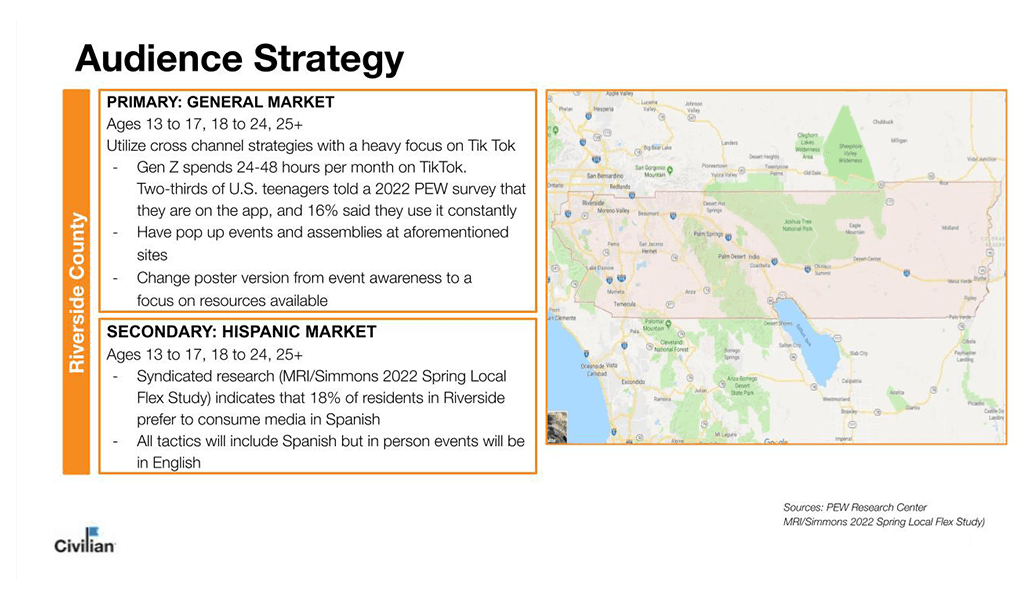
I led a qualitative research effort across multiple community touchpoints, including semi-structured interviews and focus groups with adolescents (13–17) and young adults (18–24), alongside stakeholder interviews with parents, youth-serving adults, and public health staff. Research was conducted in both English and Spanish.
The goal wasn't just to audit existing materials. It was to understand the emotional and cultural logic young people were using when they dismissed prevention content, and what would have to be true for them to actually engage.
From Insight to Concept
I led a qualitative research effort across multiple community touchpoints, including semi-structured interviews and focus groups with adolescents (13–17) and young adults (18–24), alongside stakeholder interviews with parents, youth-serving adults, and public health staff. Research was conducted in both English and Spanish.
The goal wasn't just to audit existing materials. It was to understand the emotional and cultural logic young people were using when they dismissed prevention content, and what would have to be true for them to actually engage.
I led a qualitative research effort across multiple community touchpoints, including semi-structured interviews and focus groups with adolescents (13–17) and young adults (18–24), alongside stakeholder interviews with parents, youth-serving adults, and public health staff. Research was conducted in both English and Spanish.
The goal wasn't just to audit existing materials. It was to understand the emotional and cultural logic young people were using when they dismissed prevention content, and what would have to be true for them to actually engage.
I led a qualitative research effort across multiple community touchpoints, including semi-structured interviews and focus groups with adolescents (13–17) and young adults (18–24), alongside stakeholder interviews with parents, youth-serving adults, and public health staff. Research was conducted in both English and Spanish.
The goal wasn't just to audit existing materials. It was to understand the emotional and cultural logic young people were using when they dismissed prevention content, and what would have to be true for them to actually engage.
1. Youth don't reject risk — they reject inauthenticity. Low engagement wasn't apathy. It was a response to messaging that felt generic, institutional, and disconnected from real life. Fear-based narratives were actively dismissed. Young people were paying attention,
just not to content that didn't feel honest.
2. Identity is more motivating than fear. Framing substance use as something that could dilute passions, relationships, and future potential resonated far more than consequence-focused messaging. Young people responded to their sense of self being at stake, not punishment or moral judgment.
3. Cultural context and language shape trust. Literal translations and culturally generic content reduced perceived relevance, especially within Latino communities. Trust was built through relational, culturally grounded communication, not just Spanish words on an English layout.
What I Found
1. Youth don't reject risk — they reject inauthenticity. Low engagement wasn't apathy. It was a response to messaging that felt generic, institutional, and disconnected from real life. Fear-based narratives were actively dismissed. Young people were paying attention,
just not to content that didn't feel honest.
2. Identity is more motivating than fear. Framing substance use as something that could dilute passions, relationships, and future potential resonated far more than consequence-focused messaging. Young people responded to their sense of self being at stake, not punishment or moral judgment.
3. Cultural context and language shape trust. Literal translations and culturally generic content reduced perceived relevance, especially within Latino communities. Trust was built through relational, culturally grounded communication, not just Spanish words on an English layout.
The research pointed to one clear direction: stop leading with what drugs will do to you,
and start leading with who you are.
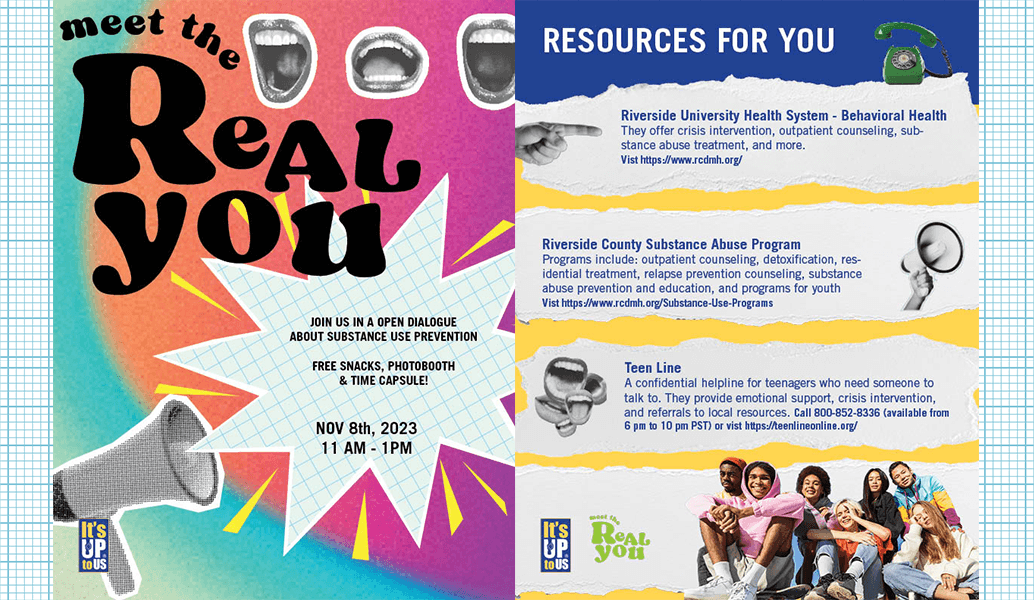
I developed the Meet the Real You concept, a campaign framing that repositioned prevention as a way to protect your evolving identity during a critical developmental window. Rather than fear or restriction, the message centered agency, authenticity, and self-expression.
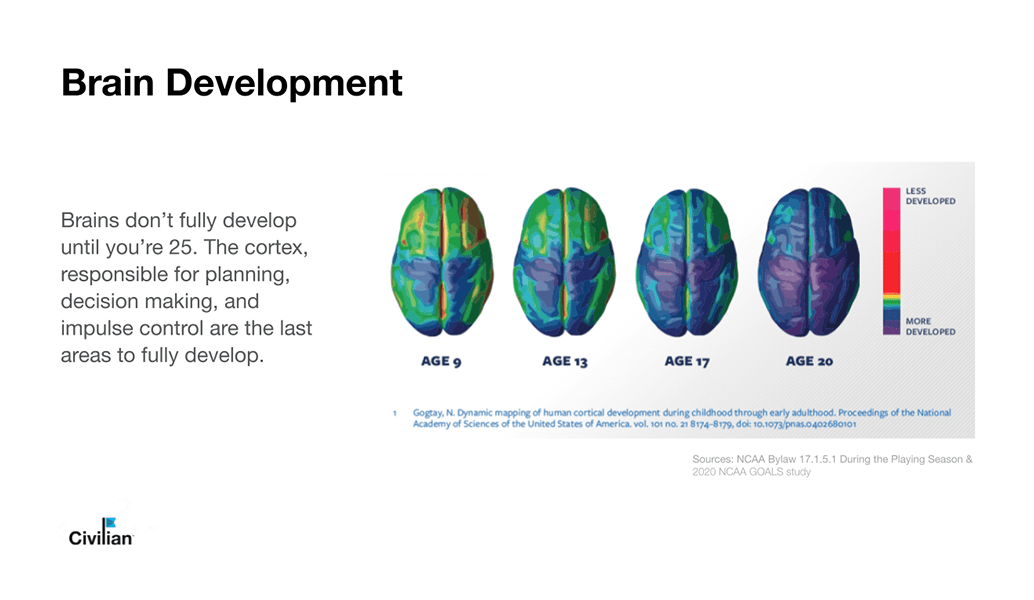
The brain-development angle, that the brain continues developing until around age 25, became an empowerment frame rather than a warning. It opened the door for honest conversations between youth, parents, and trusted adults without triggering defensiveness.
This wasn't a creative hunch. It was a direct translation of what the research surfaced.
Designing the Campaign
From Insight to Concept
The research pointed to one clear direction: stop leading with what drugs will do to you,
and start leading with who you are.
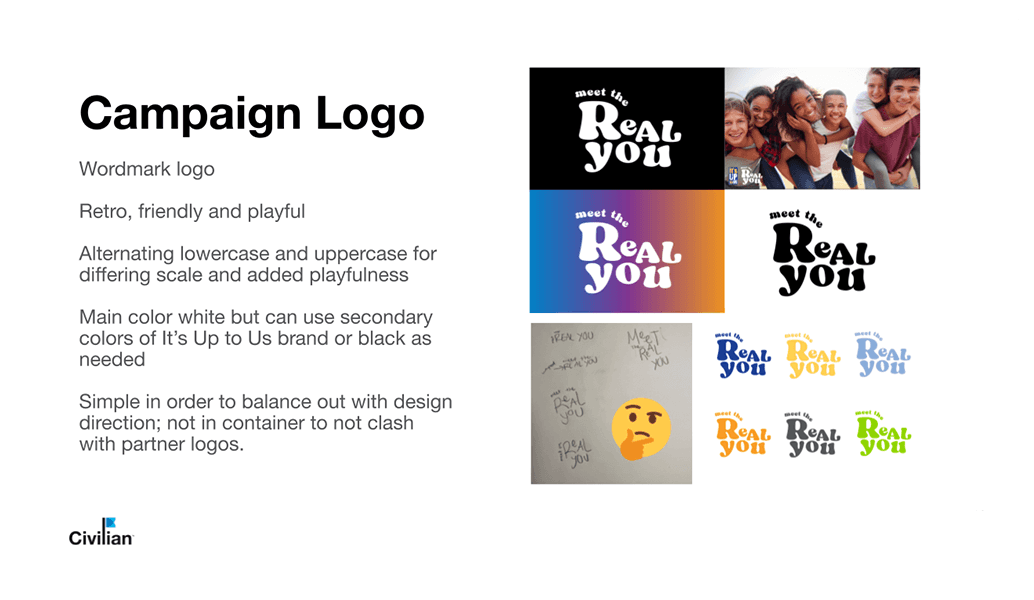
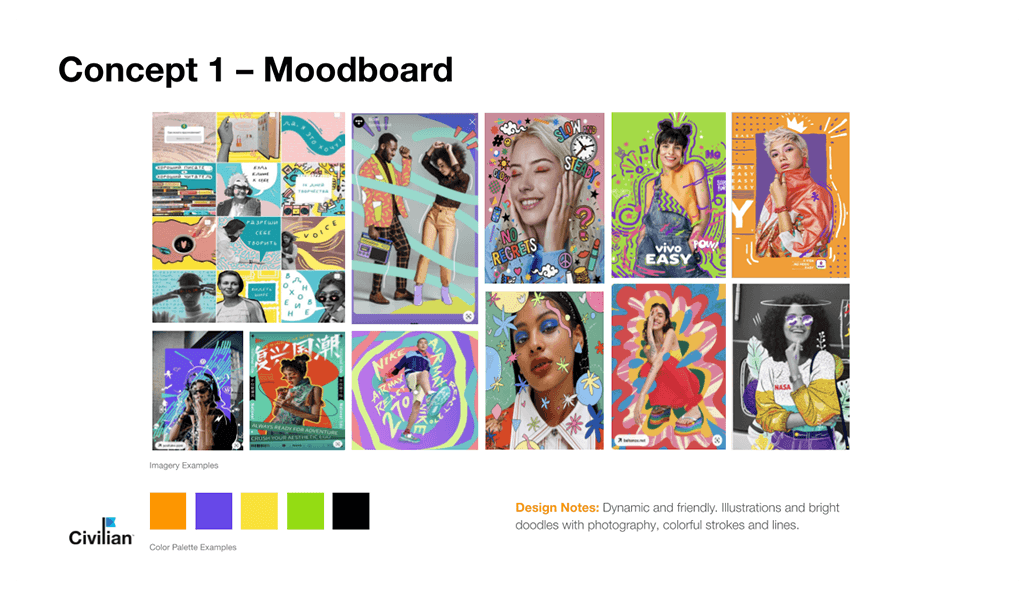
I developed the Meet the Real You concept, a campaign framing that repositioned prevention as a way to protect your evolving identity during a critical developmental window. Rather than fear or restriction, the message centered agency, authenticity, and self-expression.
The brain-development angle, that the brain continues developing until around age 25, became an empowerment frame rather than a warning. It opened the door for honest conversations between youth, parents, and trusted adults without triggering defensiveness.
This wasn't a creative hunch. It was a direct translation of what the research surfaced.
From Insight to Concept
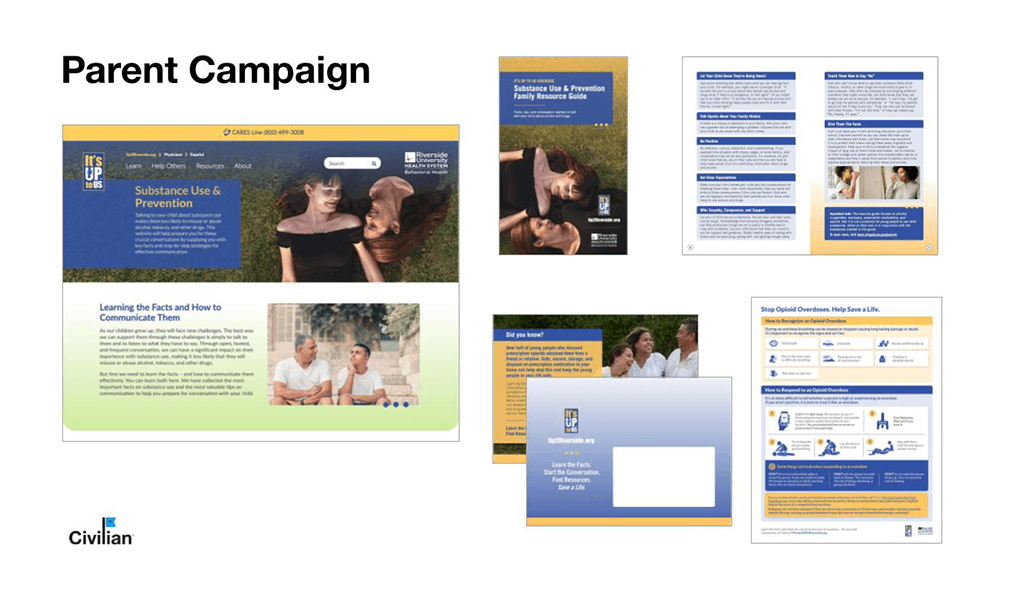
From that concept, I designed the full campaign, with all deliverables bilingual and
built for the platforms and spaces where Riverside youth actually spend time:
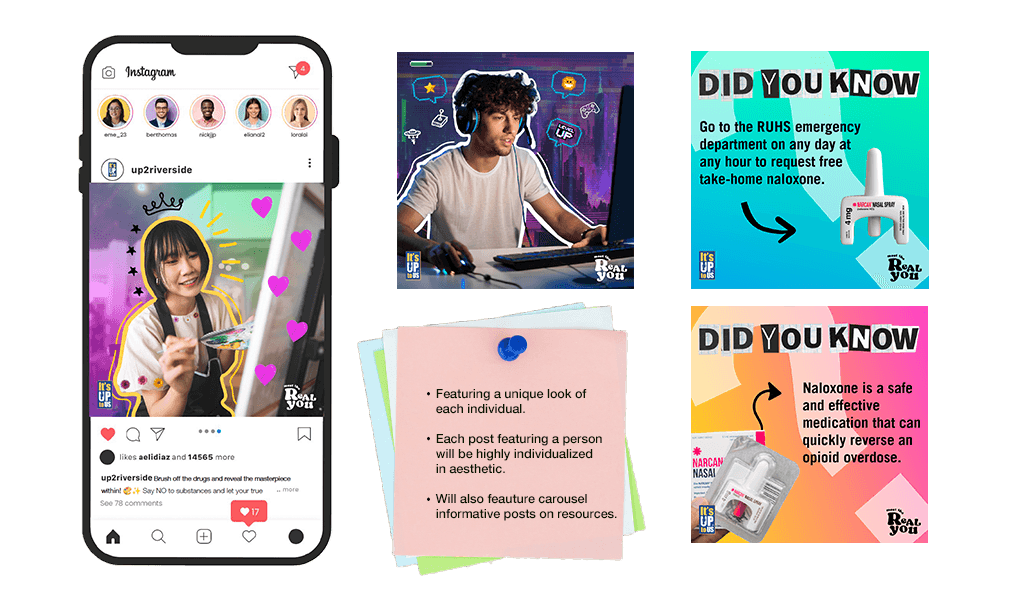
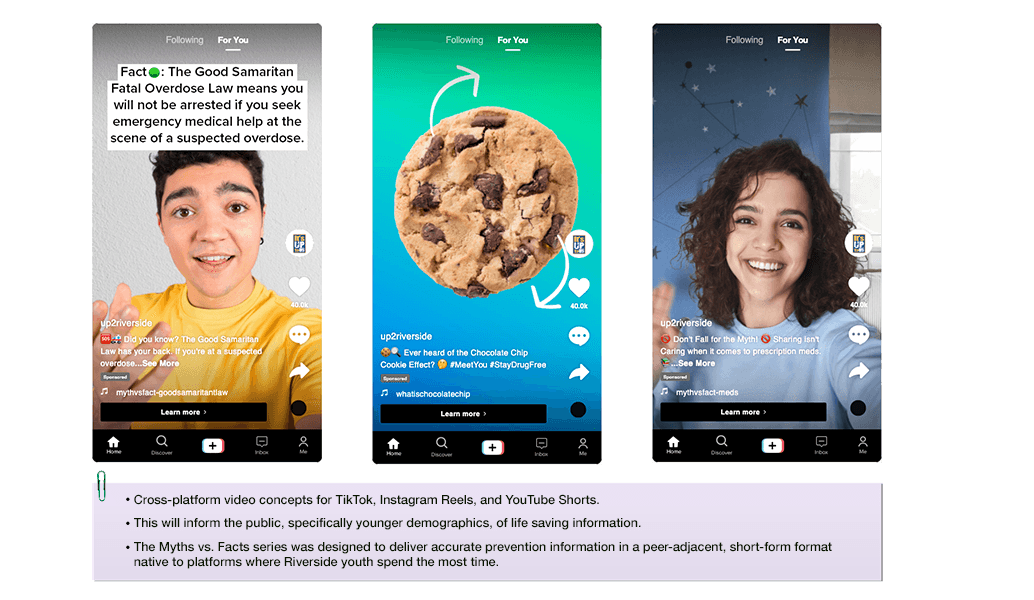
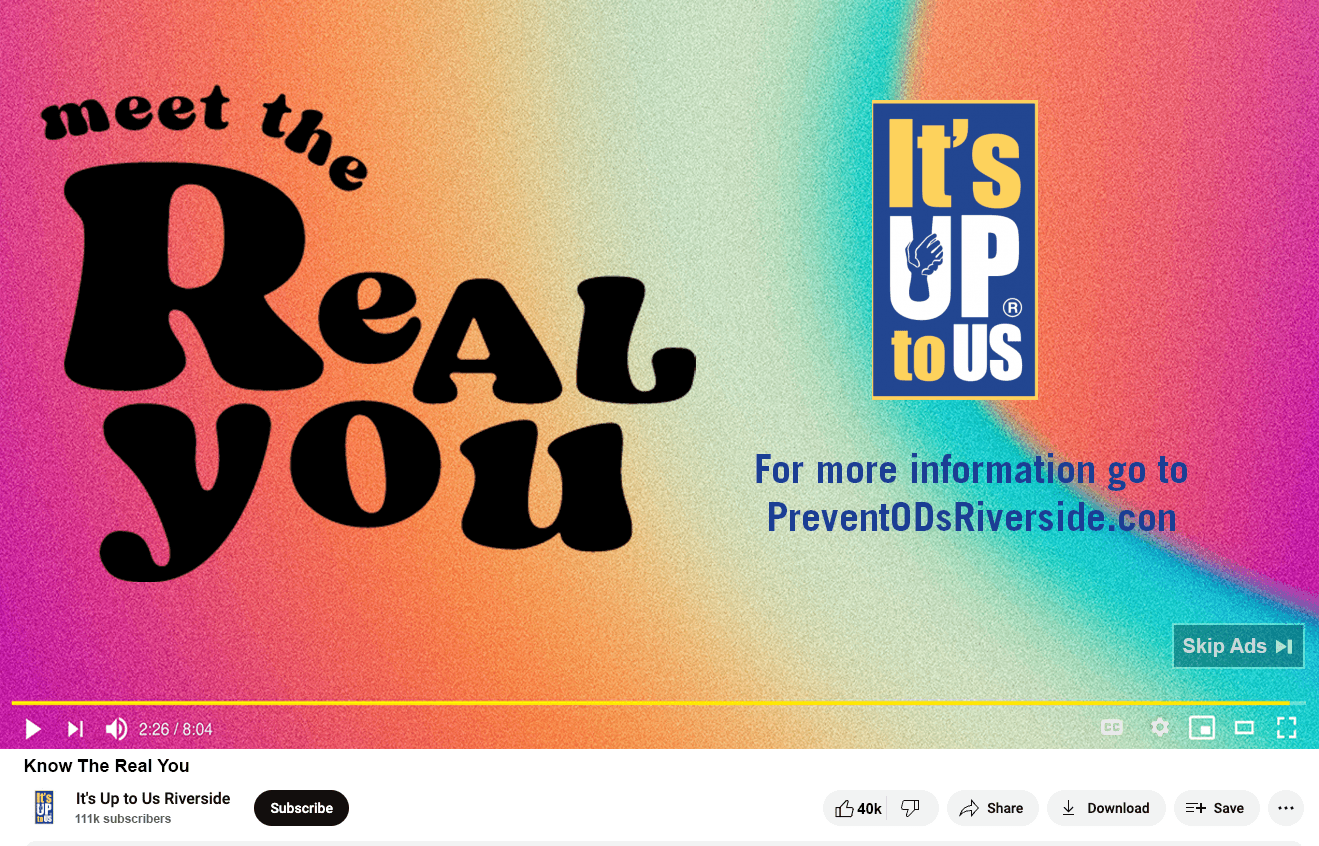
Social media content optimized for TikTok and YouTube Shorts (short-form, peer-adjacent, authentic in tone)
Posters, flyers, and print materials in English and Spanish
Event and community booth materials
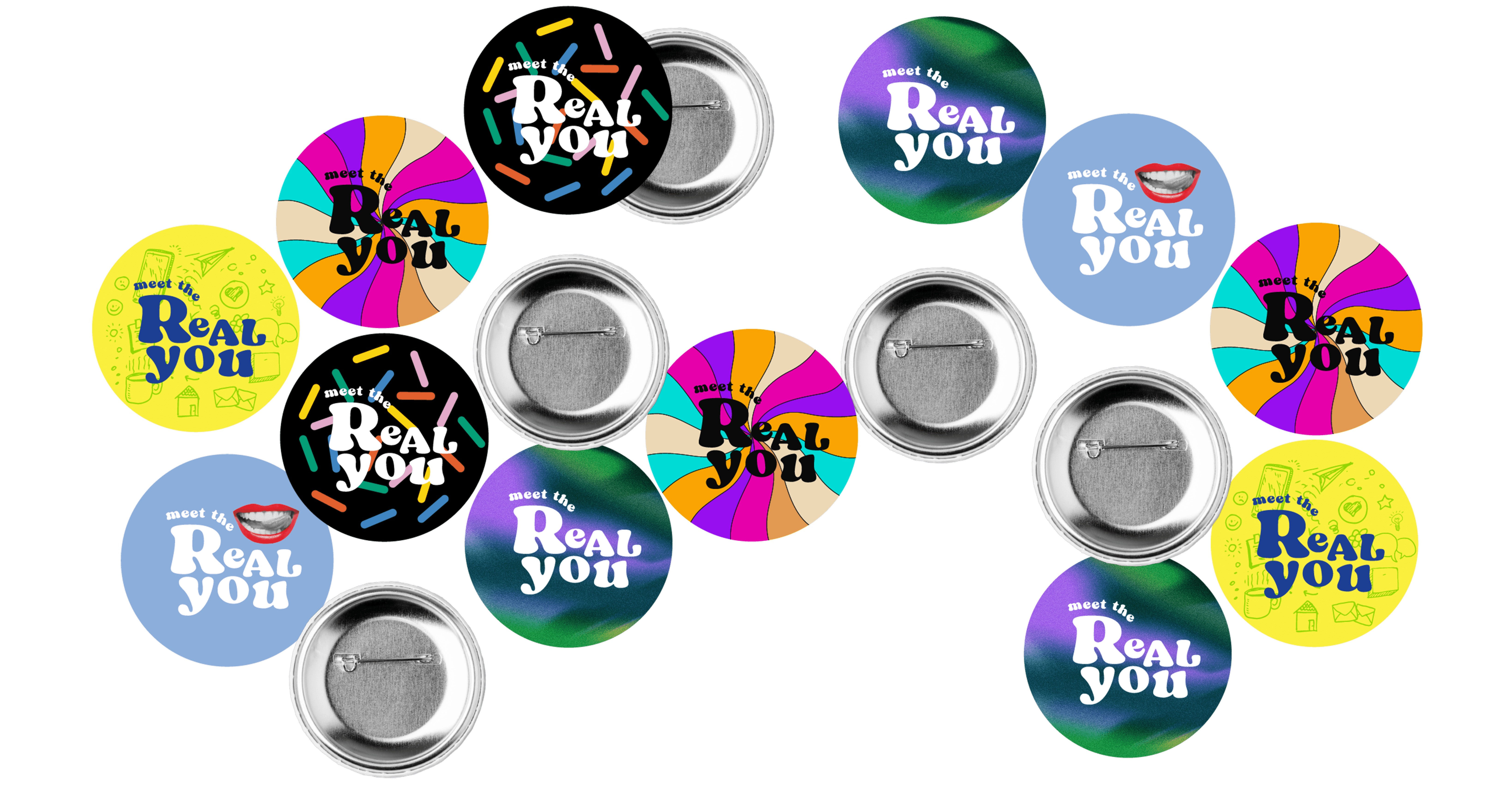
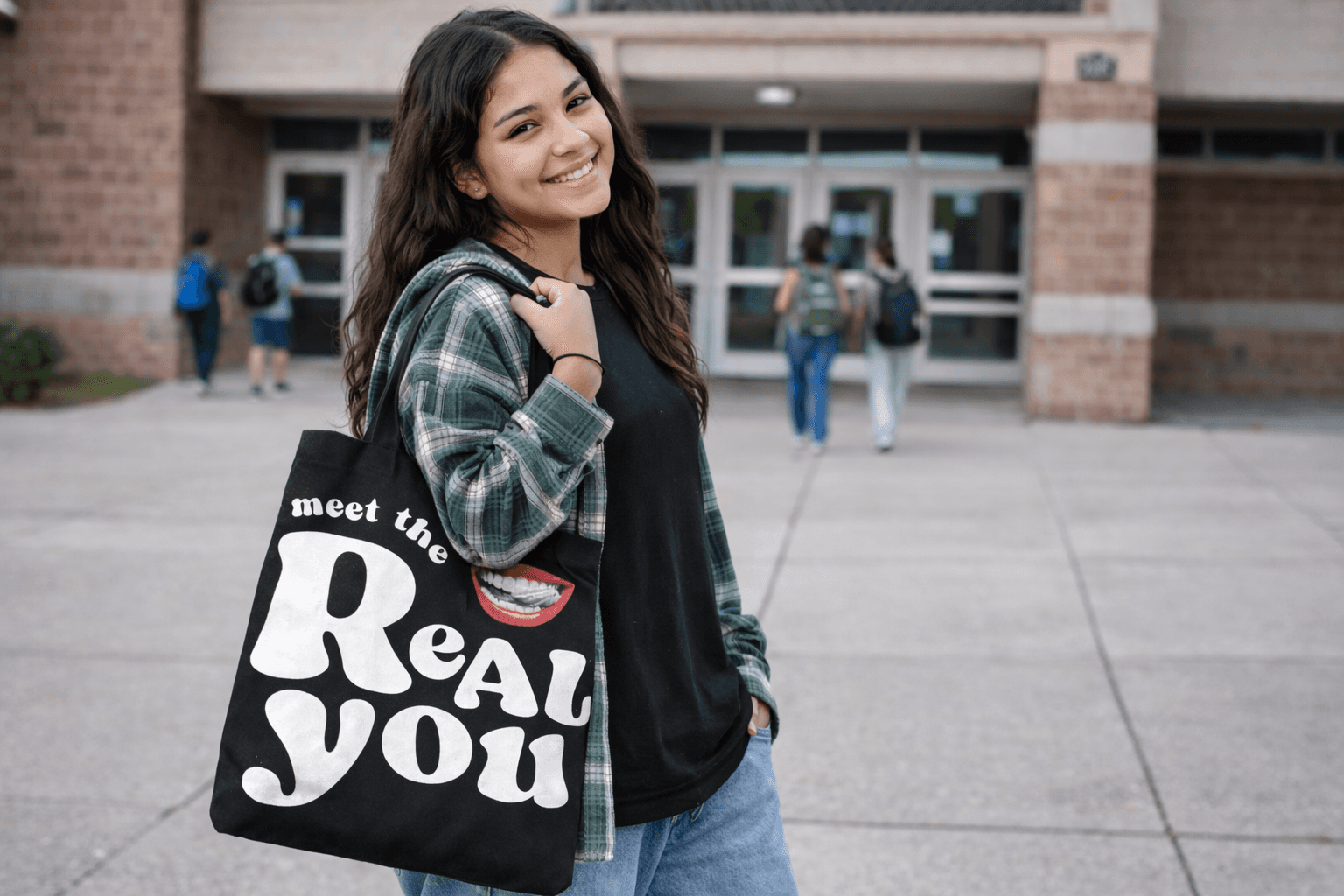
Merchandise
Community prevention events designed as in-person campaign extensions, welcoming,
non-judgmental, and resource-oriented
All bilingual materials were designed with cultural nuance rather than direct translation.
Tone, imagery, and framing were adapted for
the communities they were meant to serve.
Outcome
Designing the Campaign
From that concept, I designed the full campaign, with all deliverables bilingual and
built for the platforms and spaces where Riverside youth actually spend time:
Social media content optimized for TikTok and YouTube Shorts (short-form, peer-adjacent, authentic in tone)
Posters, flyers, and print materials in English and Spanish
Event and community booth materials
Merchandise
Community prevention events designed as in-person campaign extensions, welcoming,
non-judgmental, and resource-oriented
All bilingual materials were designed with cultural nuance rather than direct translation.
Tone, imagery, and framing were adapted for
the communities they were meant to serve.
Designing the Campaign
The research pointed to one clear direction: stop leading with what drugs will do to you,
and start leading with who you are.
I developed the Meet the Real You concept, a campaign framing that repositioned prevention as a way to protect your evolving identity during a critical developmental window. Rather than fear or restriction, the message centered agency, authenticity, and self-expression.
The brain-development angle, that the brain continues developing until around age 25, became an empowerment frame rather than a warning. It opened the door for honest conversations between youth, parents, and trusted adults without triggering defensiveness.
This wasn't a creative hunch. It was a direct translation of what the research surfaced.
Outcome
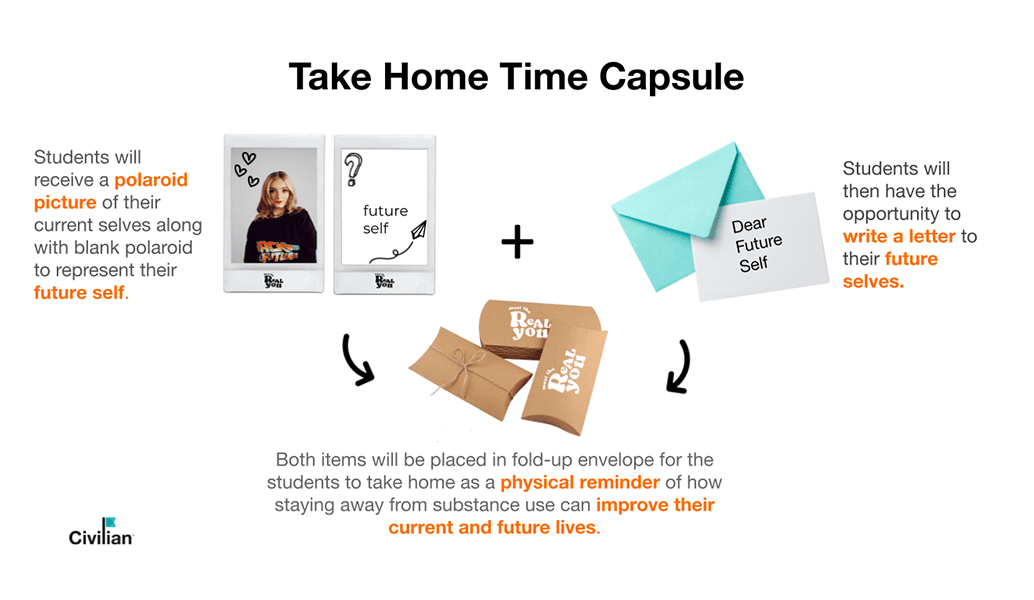
From that concept, I designed the full campaign, with all deliverables bilingual and
built for the platforms and spaces where Riverside youth actually spend time:
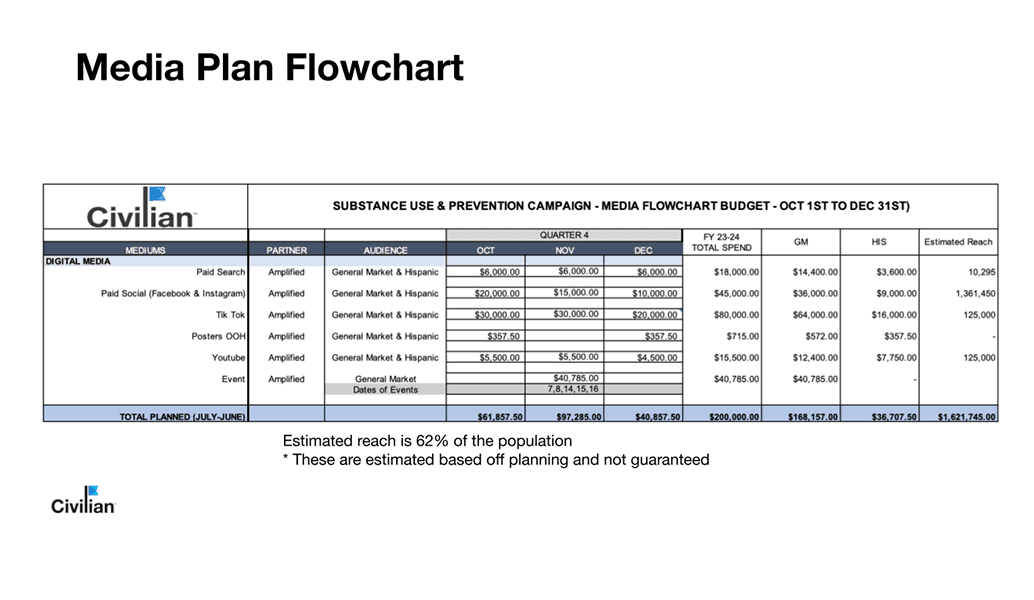
Social media content optimized for TikTok and YouTube Shorts (short-form, peer-adjacent, authentic in tone)
Posters, flyers, and print materials in English and Spanish
Event and community booth materials
Merchandise
Community prevention events designed as in-person campaign extensions, welcoming,
non-judgmental, and resource-oriented
All bilingual materials were designed with cultural nuance rather than direct translation.
Tone, imagery, and framing were adapted for
the communities they were meant to serve.
Outcome
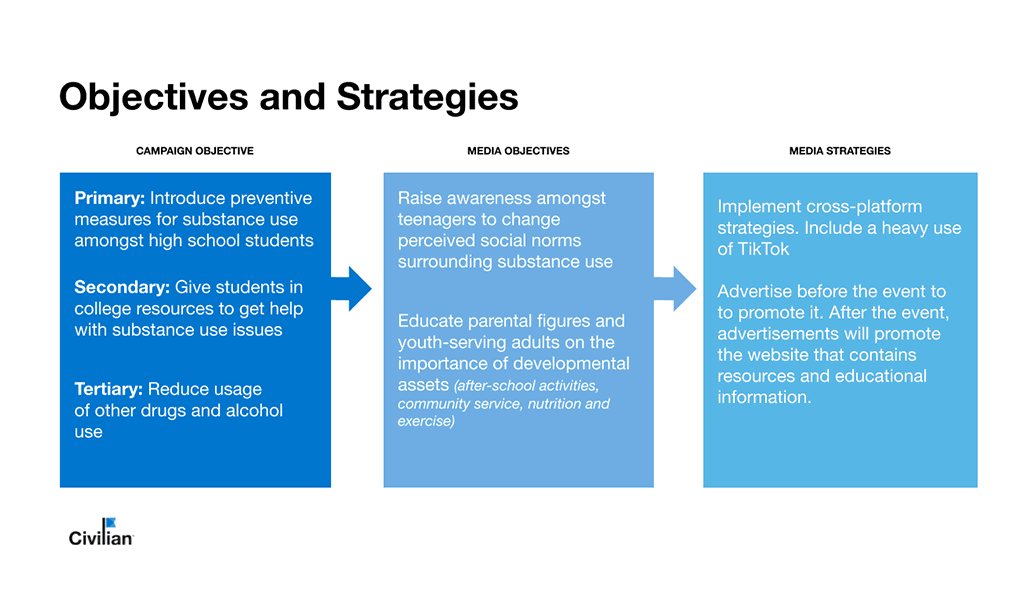
Prevention is a long game, and no campaign ends a crisis in a single cycle. But this work shifted the strategic foundation for how Riverside County approached youth substance-use communication:
Fear-based messaging was replaced with identity-centered framing
Bilingual content was redesigned for cultural resonance, not just translation
Community events were reframed as welcoming access points, not institutional outreach
Youth, parents, and youth-serving adults were given a shared language for open dialogue
The research didn't just inform the campaign. It changed the direction of the work entirely.
My Role
Lead Researcher & Creative Concept Designer — end to end, from research design through final deliverables.
I owned the research, the synthesis, the concept, and the execution, navigating public health stakeholders, community partners, and real-world public-sector constraints throughout.
My Role
My Role
Outcome
Prevention is a long game, and no campaign ends a crisis in a single cycle. But this work shifted the strategic foundation for how Riverside County approached youth substance-use communication:
Fear-based messaging was replaced with identity-centered framing
Bilingual content was redesigned for cultural resonance, not just translation
Community events were reframed as welcoming access points, not institutional outreach
Youth, parents, and youth-serving adults were given a shared language for open dialogue
The research didn't just inform the campaign. It changed the direction of the work entirely.
Prevention is a long game, and no campaign ends a crisis in a single cycle. But this work shifted the strategic foundation for how Riverside County approached youth substance-use communication:
Fear-based messaging was replaced with identity-centered framing
Bilingual content was redesigned for cultural resonance, not just translation
Community events were reframed as welcoming access points, not institutional outreach
Youth, parents, and youth-serving adults were given a shared language for open dialogue
The research didn't just inform the campaign. It changed the direction of the work entirely.
Outcome
Reflection
Reflection
Reflection
This project reinforced something I carry into every public sector engagement: communities can tell when something wasn't made for them. The most important design decision on this project happened in the research phase, choosing to listen before designing, and letting what we heard actually change the direction. That's the work.
My Role
Lead Researcher & Creative Concept Designer — end to end, from research design through final deliverables.
I owned the research, the synthesis, the concept, and the execution, navigating public health stakeholders, community partners, and real-world public-sector constraints throughout.
Lead Researcher & Creative Concept Designer — end to end, from research design through final deliverables.
I owned the research, the synthesis, the concept, and the execution, navigating public health stakeholders, community partners, and real-world public-sector constraints throughout.
Reflection
Reflection
Reflection
This project reinforced something I carry into every public sector engagement: communities can tell when something wasn't made for them. The most important design decision on this project happened in the research phase, choosing to listen before designing, and letting what we heard actually change the direction. That's the work.
Reflection
This project reinforced something I carry into every public sector engagement: communities can tell when something wasn't made for them. The most important design decision on this project happened in the research phase, choosing to listen before designing, and letting what we heard actually change the direction. That's the work.




Meet the Real You
Meet the Real You
Youth Substance-Use Prevention Campaign · Bilingual (English / Spanish) Riverside University Health System – Behavioral Health
Youth Substance-Use Prevention Campaign · Bilingual (English / Spanish) Riverside University Health System – Behavioral Health
My Role
UX Researcher · Campaign Designer · Visual Designer
Organization
Civilian Agency
Timeline
2023
Methods
· Semi-structured interviews
· Focus groups
· Stakeholder interviews
· Thematic analysis
Focus
· Behavior change
· Bilingual outreach
· Youth public health
Background
Riverside County was in a fentanyl crisis. Youth overdose deaths were rising. And the prevention campaigns meant to help weren't landing, not because young people didn't care, but because the messaging didn't feel like it was made for them.
I was brought in to find out why, and to design something that would actually work.
The Challenge
Riverside County's youth substance misuse rates were climbing despite existing prevention efforts. Nearly 1 in 8 teenagers reported illicit substance misuse, and overdose deaths among 15 to 24 year olds, particularly from fentanyl, remained alarmingly high. Underserved and lower-income Latino communities were disproportionately impacted.
The mandate was clear: understand why current messaging was failing, and redesign it to resonate. The constraints were real: public-sector budget, compressed timelines, and the need to serve a predominantly bilingual, bicultural community. Not just translate materials,
but design for cultural context from the ground up.
My Approach
1. Youth don't reject risk — they reject inauthenticity. Low engagement wasn't apathy. It was a response to messaging that felt generic, institutional, and disconnected from real life. Fear-based narratives were actively dismissed. Young people were paying attention,
just not to content that didn't feel honest.
2. Identity is more motivating than fear. Framing substance use as something that could dilute passions, relationships, and future potential resonated far more than consequence-focused messaging. Young people responded to their sense of self being at stake, not punishment or moral judgment.
3. Cultural context and language shape trust. Literal translations and culturally generic content reduced perceived relevance, especially within Latino communities. Trust was built through relational, culturally grounded communication, not just Spanish words on an English layout.
I led a qualitative research effort across multiple community touchpoints, including semi-structured interviews and focus groups with adolescents (13–17) and young adults (18–24), alongside stakeholder interviews with parents, youth-serving adults, and public health staff. Research was conducted in both English and Spanish.
The goal wasn't just to audit existing materials. It was to understand the emotional and cultural logic young people were using when they dismissed prevention content, and what would have to be true for them to actually engage.
From Insight to Concept
I led a qualitative research effort across multiple community touchpoints, including semi-structured interviews and focus groups with adolescents (13–17) and young adults (18–24), alongside stakeholder interviews with parents, youth-serving adults, and public health staff. Research was conducted in both English and Spanish.
The goal wasn't just to audit existing materials. It was to understand the emotional and cultural logic young people were using when they dismissed prevention content, and what would have to be true for them to actually engage.
I led a qualitative research effort across multiple community touchpoints, including semi-structured interviews and focus groups with adolescents (13–17) and young adults (18–24), alongside stakeholder interviews with parents, youth-serving adults, and public health staff. Research was conducted in both English and Spanish.
The goal wasn't just to audit existing materials. It was to understand the emotional and cultural logic young people were using when they dismissed prevention content, and what would have to be true for them to actually engage.
I led a qualitative research effort across multiple community touchpoints, including semi-structured interviews and focus groups with adolescents (13–17) and young adults (18–24), alongside stakeholder interviews with parents, youth-serving adults, and public health staff. Research was conducted in both English and Spanish.
The goal wasn't just to audit existing materials. It was to understand the emotional and cultural logic young people were using when they dismissed prevention content, and what would have to be true for them to actually engage.
1. Youth don't reject risk — they reject inauthenticity. Low engagement wasn't apathy. It was a response to messaging that felt generic, institutional, and disconnected from real life. Fear-based narratives were actively dismissed. Young people were paying attention,
just not to content that didn't feel honest.
2. Identity is more motivating than fear. Framing substance use as something that could dilute passions, relationships, and future potential resonated far more than consequence-focused messaging. Young people responded to their sense of self being at stake, not punishment or moral judgment.
3. Cultural context and language shape trust. Literal translations and culturally generic content reduced perceived relevance, especially within Latino communities. Trust was built through relational, culturally grounded communication, not just Spanish words on an English layout.
What I Found
1. Youth don't reject risk — they reject inauthenticity. Low engagement wasn't apathy. It was a response to messaging that felt generic, institutional, and disconnected from real life. Fear-based narratives were actively dismissed. Young people were paying attention,
just not to content that didn't feel honest.
2. Identity is more motivating than fear. Framing substance use as something that could dilute passions, relationships, and future potential resonated far more than consequence-focused messaging. Young people responded to their sense of self being at stake, not punishment or moral judgment.
3. Cultural context and language shape trust. Literal translations and culturally generic content reduced perceived relevance, especially within Latino communities. Trust was built through relational, culturally grounded communication, not just Spanish words on an English layout.
The research pointed to one clear direction: stop leading with what drugs will do to you,
and start leading with who you are.
I developed the Meet the Real You concept, a campaign framing that repositioned prevention as a way to protect your evolving identity during a critical developmental window. Rather than fear or restriction, the message centered agency, authenticity, and self-expression.
The brain-development angle, that the brain continues developing until around age 25, became an empowerment frame rather than a warning. It opened the door for honest conversations between youth, parents, and trusted adults without triggering defensiveness.
This wasn't a creative hunch. It was a direct translation of what the research surfaced.
Designing the Campaign
From Insight to Concept
The research pointed to one clear direction: stop leading with what drugs will do to you,
and start leading with who you are.
I developed the Meet the Real You concept, a campaign framing that repositioned prevention as a way to protect your evolving identity during a critical developmental window. Rather than fear or restriction, the message centered agency, authenticity, and self-expression.
The brain-development angle, that the brain continues developing until around age 25, became an empowerment frame rather than a warning. It opened the door for honest conversations between youth, parents, and trusted adults without triggering defensiveness.
This wasn't a creative hunch. It was a direct translation of what the research surfaced.
From Insight to Concept
From that concept, I designed the full campaign, with all deliverables bilingual and
built for the platforms and spaces where Riverside youth actually spend time:
Social media content optimized for TikTok and YouTube Shorts (short-form, peer-adjacent, authentic in tone)
Posters, flyers, and print materials in English and Spanish
Event and community booth materials
Merchandise
Community prevention events designed as in-person campaign extensions, welcoming,
non-judgmental, and resource-oriented
All bilingual materials were designed with cultural nuance rather than direct translation.
Tone, imagery, and framing were adapted for
the communities they were meant to serve.
Outcome
Designing the Campaign
From that concept, I designed the full campaign, with all deliverables bilingual and
built for the platforms and spaces where Riverside youth actually spend time:
Social media content optimized for TikTok and YouTube Shorts (short-form, peer-adjacent, authentic in tone)
Posters, flyers, and print materials in English and Spanish
Event and community booth materials
Merchandise
Community prevention events designed as in-person campaign extensions, welcoming,
non-judgmental, and resource-oriented
All bilingual materials were designed with cultural nuance rather than direct translation.
Tone, imagery, and framing were adapted for
the communities they were meant to serve.
Designing the Campaign
The research pointed to one clear direction: stop leading with what drugs will do to you,
and start leading with who you are.
I developed the Meet the Real You concept, a campaign framing that repositioned prevention as a way to protect your evolving identity during a critical developmental window. Rather than fear or restriction, the message centered agency, authenticity, and self-expression.
The brain-development angle, that the brain continues developing until around age 25, became an empowerment frame rather than a warning. It opened the door for honest conversations between youth, parents, and trusted adults without triggering defensiveness.
This wasn't a creative hunch. It was a direct translation of what the research surfaced.
Outcome
From that concept, I designed the full campaign, with all deliverables bilingual and
built for the platforms and spaces where Riverside youth actually spend time:
Social media content optimized for TikTok and YouTube Shorts (short-form, peer-adjacent, authentic in tone)
Posters, flyers, and print materials in English and Spanish
Event and community booth materials
Merchandise
Community prevention events designed as in-person campaign extensions, welcoming,
non-judgmental, and resource-oriented
All bilingual materials were designed with cultural nuance rather than direct translation.
Tone, imagery, and framing were adapted for
the communities they were meant to serve.
Outcome
Prevention is a long game, and no campaign ends a crisis in a single cycle. But this work shifted the strategic foundation for how Riverside County approached youth substance-use communication:
Fear-based messaging was replaced with identity-centered framing
Bilingual content was redesigned for cultural resonance, not just translation
Community events were reframed as welcoming access points, not institutional outreach
Youth, parents, and youth-serving adults were given a shared language for open dialogue
The research didn't just inform the campaign. It changed the direction of the work entirely.
My Role
Lead Researcher & Creative Concept Designer — end to end, from research design through final deliverables.
I owned the research, the synthesis, the concept, and the execution, navigating public health stakeholders, community partners, and real-world public-sector constraints throughout.
My Role
My Role
Outcome
Prevention is a long game, and no campaign ends a crisis in a single cycle. But this work shifted the strategic foundation for how Riverside County approached youth substance-use communication:
Fear-based messaging was replaced with identity-centered framing
Bilingual content was redesigned for cultural resonance, not just translation
Community events were reframed as welcoming access points, not institutional outreach
Youth, parents, and youth-serving adults were given a shared language for open dialogue
The research didn't just inform the campaign. It changed the direction of the work entirely.
Prevention is a long game, and no campaign ends a crisis in a single cycle. But this work shifted the strategic foundation for how Riverside County approached youth substance-use communication:
Fear-based messaging was replaced with identity-centered framing
Bilingual content was redesigned for cultural resonance, not just translation
Community events were reframed as welcoming access points, not institutional outreach
Youth, parents, and youth-serving adults were given a shared language for open dialogue
The research didn't just inform the campaign. It changed the direction of the work entirely.
Outcome
Reflection
Reflection
Reflection
This project reinforced something I carry into every public sector engagement: communities can tell when something wasn't made for them. The most important design decision on this project happened in the research phase, choosing to listen before designing, and letting what we heard actually change the direction. That's the work.
My Role
Lead Researcher & Creative Concept Designer — end to end, from research design through final deliverables.
I owned the research, the synthesis, the concept, and the execution, navigating public health stakeholders, community partners, and real-world public-sector constraints throughout.
Lead Researcher & Creative Concept Designer — end to end, from research design through final deliverables.
I owned the research, the synthesis, the concept, and the execution, navigating public health stakeholders, community partners, and real-world public-sector constraints throughout.
Reflection
Reflection
Reflection
This project reinforced something I carry into every public sector engagement: communities can tell when something wasn't made for them. The most important design decision on this project happened in the research phase, choosing to listen before designing, and letting what we heard actually change the direction. That's the work.
Reflection
This project reinforced something I carry into every public sector engagement: communities can tell when something wasn't made for them. The most important design decision on this project happened in the research phase, choosing to listen before designing, and letting what we heard actually change the direction. That's the work.
Meet the Real You
Meet the Real You
Youth Substance-Use Prevention Campaign · Bilingual (English / Spanish) Riverside University Health System – Behavioral Health
Youth Substance-Use Prevention Campaign · Bilingual (English / Spanish) Riverside University Health System – Behavioral Health
My Role
UX Researcher · Campaign Designer · Visual Designer
Organization
Civilian Agency
Timeline
2023
Methods
· Semi-structured interviews
· Focus groups
· Stakeholder interviews
· Thematic analysis
Focus
· Behavior change
· Bilingual outreach
· Youth public health
Background
Riverside County was in a fentanyl crisis. Youth overdose deaths were rising. And the prevention campaigns meant to help weren't landing, not because young people didn't care, but because the messaging didn't feel like it was made for them.
I was brought in to find out why, and to design something that would actually work.
The Challenge
Riverside County's youth substance misuse rates were climbing despite existing prevention efforts. Nearly 1 in 8 teenagers reported illicit substance misuse, and overdose deaths among 15 to 24 year olds, particularly from fentanyl, remained alarmingly high. Underserved and lower-income Latino communities were disproportionately impacted.
The mandate was clear: understand why current messaging was failing, and redesign it to resonate. The constraints were real: public-sector budget, compressed timelines, and the need to serve a predominantly bilingual, bicultural community. Not just translate materials,
but design for cultural context from the ground up.
My Approach
1. Youth don't reject risk — they reject inauthenticity. Low engagement wasn't apathy. It was a response to messaging that felt generic, institutional, and disconnected from real life. Fear-based narratives were actively dismissed. Young people were paying attention,
just not to content that didn't feel honest.
2. Identity is more motivating than fear. Framing substance use as something that could dilute passions, relationships, and future potential resonated far more than consequence-focused messaging. Young people responded to their sense of self being at stake, not punishment or moral judgment.
3. Cultural context and language shape trust. Literal translations and culturally generic content reduced perceived relevance, especially within Latino communities. Trust was built through relational, culturally grounded communication, not just Spanish words on an English layout.
I led a qualitative research effort across multiple community touchpoints, including semi-structured interviews and focus groups with adolescents (13–17) and young adults (18–24), alongside stakeholder interviews with parents, youth-serving adults, and public health staff. Research was conducted in both English and Spanish.
The goal wasn't just to audit existing materials. It was to understand the emotional and cultural logic young people were using when they dismissed prevention content, and what would have to be true for them to actually engage.
From Insight to Concept
I led a qualitative research effort across multiple community touchpoints, including semi-structured interviews and focus groups with adolescents (13–17) and young adults (18–24), alongside stakeholder interviews with parents, youth-serving adults, and public health staff. Research was conducted in both English and Spanish.
The goal wasn't just to audit existing materials. It was to understand the emotional and cultural logic young people were using when they dismissed prevention content, and what would have to be true for them to actually engage.
I led a qualitative research effort across multiple community touchpoints, including semi-structured interviews and focus groups with adolescents (13–17) and young adults (18–24), alongside stakeholder interviews with parents, youth-serving adults, and public health staff. Research was conducted in both English and Spanish.
The goal wasn't just to audit existing materials. It was to understand the emotional and cultural logic young people were using when they dismissed prevention content, and what would have to be true for them to actually engage.
I led a qualitative research effort across multiple community touchpoints, including semi-structured interviews and focus groups with adolescents (13–17) and young adults (18–24), alongside stakeholder interviews with parents, youth-serving adults, and public health staff. Research was conducted in both English and Spanish.
The goal wasn't just to audit existing materials. It was to understand the emotional and cultural logic young people were using when they dismissed prevention content, and what would have to be true for them to actually engage.
1. Youth don't reject risk — they reject inauthenticity. Low engagement wasn't apathy. It was a response to messaging that felt generic, institutional, and disconnected from real life. Fear-based narratives were actively dismissed. Young people were paying attention,
just not to content that didn't feel honest.
2. Identity is more motivating than fear. Framing substance use as something that could dilute passions, relationships, and future potential resonated far more than consequence-focused messaging. Young people responded to their sense of self being at stake, not punishment or moral judgment.
3. Cultural context and language shape trust. Literal translations and culturally generic content reduced perceived relevance, especially within Latino communities. Trust was built through relational, culturally grounded communication, not just Spanish words on an English layout.
What I Found
1. Youth don't reject risk — they reject inauthenticity. Low engagement wasn't apathy. It was a response to messaging that felt generic, institutional, and disconnected from real life. Fear-based narratives were actively dismissed. Young people were paying attention,
just not to content that didn't feel honest.
2. Identity is more motivating than fear. Framing substance use as something that could dilute passions, relationships, and future potential resonated far more than consequence-focused messaging. Young people responded to their sense of self being at stake, not punishment or moral judgment.
3. Cultural context and language shape trust. Literal translations and culturally generic content reduced perceived relevance, especially within Latino communities. Trust was built through relational, culturally grounded communication, not just Spanish words on an English layout.
The research pointed to one clear direction: stop leading with what drugs will do to you,
and start leading with who you are.
I developed the Meet the Real You concept, a campaign framing that repositioned prevention as a way to protect your evolving identity during a critical developmental window. Rather than fear or restriction, the message centered agency, authenticity, and self-expression.
The brain-development angle, that the brain continues developing until around age 25, became an empowerment frame rather than a warning. It opened the door for honest conversations between youth, parents, and trusted adults without triggering defensiveness.
This wasn't a creative hunch. It was a direct translation of what the research surfaced.
Designing the Campaign
From Insight to Concept
The research pointed to one clear direction: stop leading with what drugs will do to you,
and start leading with who you are.
I developed the Meet the Real You concept, a campaign framing that repositioned prevention as a way to protect your evolving identity during a critical developmental window. Rather than fear or restriction, the message centered agency, authenticity, and self-expression.
The brain-development angle, that the brain continues developing until around age 25, became an empowerment frame rather than a warning. It opened the door for honest conversations between youth, parents, and trusted adults without triggering defensiveness.
This wasn't a creative hunch. It was a direct translation of what the research surfaced.
From Insight to Concept
From that concept, I designed the full campaign, with all deliverables bilingual and
built for the platforms and spaces where Riverside youth actually spend time:
Social media content optimized for TikTok and YouTube Shorts (short-form, peer-adjacent, authentic in tone)
Posters, flyers, and print materials in English and Spanish
Event and community booth materials
Merchandise
Community prevention events designed as in-person campaign extensions, welcoming,
non-judgmental, and resource-oriented
All bilingual materials were designed with cultural nuance rather than direct translation.
Tone, imagery, and framing were adapted for
the communities they were meant to serve.
Outcome
Designing the Campaign
From that concept, I designed the full campaign, with all deliverables bilingual and
built for the platforms and spaces where Riverside youth actually spend time:
Social media content optimized for TikTok and YouTube Shorts (short-form, peer-adjacent, authentic in tone)
Posters, flyers, and print materials in English and Spanish
Event and community booth materials
Merchandise
Community prevention events designed as in-person campaign extensions, welcoming,
non-judgmental, and resource-oriented
All bilingual materials were designed with cultural nuance rather than direct translation.
Tone, imagery, and framing were adapted for
the communities they were meant to serve.
Designing the Campaign
The research pointed to one clear direction: stop leading with what drugs will do to you,
and start leading with who you are.
I developed the Meet the Real You concept, a campaign framing that repositioned prevention as a way to protect your evolving identity during a critical developmental window. Rather than fear or restriction, the message centered agency, authenticity, and self-expression.
The brain-development angle, that the brain continues developing until around age 25, became an empowerment frame rather than a warning. It opened the door for honest conversations between youth, parents, and trusted adults without triggering defensiveness.
This wasn't a creative hunch. It was a direct translation of what the research surfaced.
Outcome
From that concept, I designed the full campaign, with all deliverables bilingual and
built for the platforms and spaces where Riverside youth actually spend time:
Social media content optimized for TikTok and YouTube Shorts (short-form, peer-adjacent, authentic in tone)
Posters, flyers, and print materials in English and Spanish
Event and community booth materials
Merchandise
Community prevention events designed as in-person campaign extensions, welcoming,
non-judgmental, and resource-oriented
All bilingual materials were designed with cultural nuance rather than direct translation.
Tone, imagery, and framing were adapted for
the communities they were meant to serve.
Outcome
Prevention is a long game, and no campaign ends a crisis in a single cycle. But this work shifted the strategic foundation for how Riverside County approached youth substance-use communication:
Fear-based messaging was replaced with identity-centered framing
Bilingual content was redesigned for cultural resonance, not just translation
Community events were reframed as welcoming access points, not institutional outreach
Youth, parents, and youth-serving adults were given a shared language for open dialogue
The research didn't just inform the campaign. It changed the direction of the work entirely.
My Role
Lead Researcher & Creative Concept Designer — end to end, from research design through final deliverables.
I owned the research, the synthesis, the concept, and the execution, navigating public health stakeholders, community partners, and real-world public-sector constraints throughout.
My Role
My Role
Outcome
Prevention is a long game, and no campaign ends a crisis in a single cycle. But this work shifted the strategic foundation for how Riverside County approached youth substance-use communication:
Fear-based messaging was replaced with identity-centered framing
Bilingual content was redesigned for cultural resonance, not just translation
Community events were reframed as welcoming access points, not institutional outreach
Youth, parents, and youth-serving adults were given a shared language for open dialogue
The research didn't just inform the campaign. It changed the direction of the work entirely.
Prevention is a long game, and no campaign ends a crisis in a single cycle. But this work shifted the strategic foundation for how Riverside County approached youth substance-use communication:
Fear-based messaging was replaced with identity-centered framing
Bilingual content was redesigned for cultural resonance, not just translation
Community events were reframed as welcoming access points, not institutional outreach
Youth, parents, and youth-serving adults were given a shared language for open dialogue
The research didn't just inform the campaign. It changed the direction of the work entirely.
Outcome
Reflection
Reflection
Reflection
This project reinforced something I carry into every public sector engagement: communities can tell when something wasn't made for them. The most important design decision on this project happened in the research phase, choosing to listen before designing, and letting what we heard actually change the direction. That's the work.
My Role
Lead Researcher & Creative Concept Designer — end to end, from research design through final deliverables.
I owned the research, the synthesis, the concept, and the execution, navigating public health stakeholders, community partners, and real-world public-sector constraints throughout.
Lead Researcher & Creative Concept Designer — end to end, from research design through final deliverables.
I owned the research, the synthesis, the concept, and the execution, navigating public health stakeholders, community partners, and real-world public-sector constraints throughout.
Reflection
Reflection
Reflection
This project reinforced something I carry into every public sector engagement: communities can tell when something wasn't made for them. The most important design decision on this project happened in the research phase, choosing to listen before designing, and letting what we heard actually change the direction. That's the work.
Reflection
This project reinforced something I carry into every public sector engagement: communities can tell when something wasn't made for them. The most important design decision on this project happened in the research phase, choosing to listen before designing, and letting what we heard actually change the direction. That's the work.
Meet the Real You
Meet the Real You
Youth Substance-Use Prevention Campaign · Bilingual (English / Spanish) Riverside University Health System – Behavioral Health
Youth Substance-Use Prevention Campaign · Bilingual (English / Spanish) Riverside University Health System – Behavioral Health
My Role
UX Researcher · Campaign Designer · Visual Designer
Organization
Civilian Agency
Timeline
2023
Methods
· Semi-structured interviews
· Focus groups
· Stakeholder interviews
· Thematic analysis
Focus
· Behavior change
· Bilingual outreach
· Youth public health
Background
Riverside County was in a fentanyl crisis. Youth overdose deaths were rising. And the prevention campaigns meant to help weren't landing, not because young people didn't care, but because the messaging didn't feel like it was made for them.
I was brought in to find out why, and to design something that would actually work.
The Challenge
Riverside County's youth substance misuse rates were climbing despite existing prevention efforts. Nearly 1 in 8 teenagers reported illicit substance misuse, and overdose deaths among 15 to 24 year olds, particularly from fentanyl, remained alarmingly high. Underserved and lower-income Latino communities were disproportionately impacted.
The mandate was clear: understand why current messaging was failing, and redesign it to resonate. The constraints were real: public-sector budget, compressed timelines, and the need to serve a predominantly bilingual, bicultural community. Not just translate materials,
but design for cultural context from the ground up.
My Approach
1. Youth don't reject risk — they reject inauthenticity. Low engagement wasn't apathy. It was a response to messaging that felt generic, institutional, and disconnected from real life. Fear-based narratives were actively dismissed. Young people were paying attention,
just not to content that didn't feel honest.
2. Identity is more motivating than fear. Framing substance use as something that could dilute passions, relationships, and future potential resonated far more than consequence-focused messaging. Young people responded to their sense of self being at stake, not punishment or moral judgment.
3. Cultural context and language shape trust. Literal translations and culturally generic content reduced perceived relevance, especially within Latino communities. Trust was built through relational, culturally grounded communication, not just Spanish words on an English layout.
I led a qualitative research effort across multiple community touchpoints, including semi-structured interviews and focus groups with adolescents (13–17) and young adults (18–24), alongside stakeholder interviews with parents, youth-serving adults, and public health staff. Research was conducted in both English and Spanish.
The goal wasn't just to audit existing materials. It was to understand the emotional and cultural logic young people were using when they dismissed prevention content, and what would have to be true for them to actually engage.
From Insight to Concept
I led a qualitative research effort across multiple community touchpoints, including semi-structured interviews and focus groups with adolescents (13–17) and young adults (18–24), alongside stakeholder interviews with parents, youth-serving adults, and public health staff. Research was conducted in both English and Spanish.
The goal wasn't just to audit existing materials. It was to understand the emotional and cultural logic young people were using when they dismissed prevention content, and what would have to be true for them to actually engage.
I led a qualitative research effort across multiple community touchpoints, including semi-structured interviews and focus groups with adolescents (13–17) and young adults (18–24), alongside stakeholder interviews with parents, youth-serving adults, and public health staff. Research was conducted in both English and Spanish.
The goal wasn't just to audit existing materials. It was to understand the emotional and cultural logic young people were using when they dismissed prevention content, and what would have to be true for them to actually engage.
I led a qualitative research effort across multiple community touchpoints, including semi-structured interviews and focus groups with adolescents (13–17) and young adults (18–24), alongside stakeholder interviews with parents, youth-serving adults, and public health staff. Research was conducted in both English and Spanish.
The goal wasn't just to audit existing materials. It was to understand the emotional and cultural logic young people were using when they dismissed prevention content, and what would have to be true for them to actually engage.
1. Youth don't reject risk — they reject inauthenticity. Low engagement wasn't apathy. It was a response to messaging that felt generic, institutional, and disconnected from real life. Fear-based narratives were actively dismissed. Young people were paying attention,
just not to content that didn't feel honest.
2. Identity is more motivating than fear. Framing substance use as something that could dilute passions, relationships, and future potential resonated far more than consequence-focused messaging. Young people responded to their sense of self being at stake, not punishment or moral judgment.
3. Cultural context and language shape trust. Literal translations and culturally generic content reduced perceived relevance, especially within Latino communities. Trust was built through relational, culturally grounded communication, not just Spanish words on an English layout.
What I Found
1. Youth don't reject risk — they reject inauthenticity. Low engagement wasn't apathy. It was a response to messaging that felt generic, institutional, and disconnected from real life. Fear-based narratives were actively dismissed. Young people were paying attention,
just not to content that didn't feel honest.
2. Identity is more motivating than fear. Framing substance use as something that could dilute passions, relationships, and future potential resonated far more than consequence-focused messaging. Young people responded to their sense of self being at stake, not punishment or moral judgment.
3. Cultural context and language shape trust. Literal translations and culturally generic content reduced perceived relevance, especially within Latino communities. Trust was built through relational, culturally grounded communication, not just Spanish words on an English layout.
The research pointed to one clear direction: stop leading with what drugs will do to you,
and start leading with who you are.
I developed the Meet the Real You concept, a campaign framing that repositioned prevention as a way to protect your evolving identity during a critical developmental window. Rather than fear or restriction, the message centered agency, authenticity, and self-expression.
The brain-development angle, that the brain continues developing until around age 25, became an empowerment frame rather than a warning. It opened the door for honest conversations between youth, parents, and trusted adults without triggering defensiveness.
This wasn't a creative hunch. It was a direct translation of what the research surfaced.
Designing the Campaign
From Insight to Concept
The research pointed to one clear direction: stop leading with what drugs will do to you,
and start leading with who you are.
I developed the Meet the Real You concept, a campaign framing that repositioned prevention as a way to protect your evolving identity during a critical developmental window. Rather than fear or restriction, the message centered agency, authenticity, and self-expression.
The brain-development angle, that the brain continues developing until around age 25, became an empowerment frame rather than a warning. It opened the door for honest conversations between youth, parents, and trusted adults without triggering defensiveness.
This wasn't a creative hunch. It was a direct translation of what the research surfaced.
From Insight to Concept
From that concept, I designed the full campaign, with all deliverables bilingual and
built for the platforms and spaces where Riverside youth actually spend time:
Social media content optimized for TikTok and YouTube Shorts (short-form, peer-adjacent, authentic in tone)
Posters, flyers, and print materials in English and Spanish
Event and community booth materials
Merchandise
Community prevention events designed as in-person campaign extensions, welcoming,
non-judgmental, and resource-oriented
All bilingual materials were designed with cultural nuance rather than direct translation.
Tone, imagery, and framing were adapted for
the communities they were meant to serve.
Outcome
Designing the Campaign
From that concept, I designed the full campaign, with all deliverables bilingual and
built for the platforms and spaces where Riverside youth actually spend time:
Social media content optimized for TikTok and YouTube Shorts (short-form, peer-adjacent, authentic in tone)
Posters, flyers, and print materials in English and Spanish
Event and community booth materials
Merchandise
Community prevention events designed as in-person campaign extensions, welcoming,
non-judgmental, and resource-oriented
All bilingual materials were designed with cultural nuance rather than direct translation.
Tone, imagery, and framing were adapted for
the communities they were meant to serve.
Designing the Campaign
The research pointed to one clear direction: stop leading with what drugs will do to you,
and start leading with who you are.
I developed the Meet the Real You concept, a campaign framing that repositioned prevention as a way to protect your evolving identity during a critical developmental window. Rather than fear or restriction, the message centered agency, authenticity, and self-expression.
The brain-development angle, that the brain continues developing until around age 25, became an empowerment frame rather than a warning. It opened the door for honest conversations between youth, parents, and trusted adults without triggering defensiveness.
This wasn't a creative hunch. It was a direct translation of what the research surfaced.
Outcome
From that concept, I designed the full campaign, with all deliverables bilingual and
built for the platforms and spaces where Riverside youth actually spend time:
Social media content optimized for TikTok and YouTube Shorts (short-form, peer-adjacent, authentic in tone)
Posters, flyers, and print materials in English and Spanish
Event and community booth materials
Merchandise
Community prevention events designed as in-person campaign extensions, welcoming,
non-judgmental, and resource-oriented
All bilingual materials were designed with cultural nuance rather than direct translation.
Tone, imagery, and framing were adapted for
the communities they were meant to serve.
Outcome
Prevention is a long game, and no campaign ends a crisis in a single cycle. But this work shifted the strategic foundation for how Riverside County approached youth substance-use communication:
Fear-based messaging was replaced with identity-centered framing
Bilingual content was redesigned for cultural resonance, not just translation
Community events were reframed as welcoming access points, not institutional outreach
Youth, parents, and youth-serving adults were given a shared language for open dialogue
The research didn't just inform the campaign. It changed the direction of the work entirely.
My Role
Lead Researcher & Creative Concept Designer — end to end, from research design through final deliverables.
I owned the research, the synthesis, the concept, and the execution, navigating public health stakeholders, community partners, and real-world public-sector constraints throughout.
My Role
My Role
Outcome
Prevention is a long game, and no campaign ends a crisis in a single cycle. But this work shifted the strategic foundation for how Riverside County approached youth substance-use communication:
Fear-based messaging was replaced with identity-centered framing
Bilingual content was redesigned for cultural resonance, not just translation
Community events were reframed as welcoming access points, not institutional outreach
Youth, parents, and youth-serving adults were given a shared language for open dialogue
The research didn't just inform the campaign. It changed the direction of the work entirely.
Prevention is a long game, and no campaign ends a crisis in a single cycle. But this work shifted the strategic foundation for how Riverside County approached youth substance-use communication:
Fear-based messaging was replaced with identity-centered framing
Bilingual content was redesigned for cultural resonance, not just translation
Community events were reframed as welcoming access points, not institutional outreach
Youth, parents, and youth-serving adults were given a shared language for open dialogue
The research didn't just inform the campaign. It changed the direction of the work entirely.
Outcome
Reflection
Reflection
Reflection
This project reinforced something I carry into every public sector engagement: communities can tell when something wasn't made for them. The most important design decision on this project happened in the research phase, choosing to listen before designing, and letting what we heard actually change the direction. That's the work.
My Role
Lead Researcher & Creative Concept Designer — end to end, from research design through final deliverables.
I owned the research, the synthesis, the concept, and the execution, navigating public health stakeholders, community partners, and real-world public-sector constraints throughout.
Lead Researcher & Creative Concept Designer — end to end, from research design through final deliverables.
I owned the research, the synthesis, the concept, and the execution, navigating public health stakeholders, community partners, and real-world public-sector constraints throughout.
Reflection
Reflection
Reflection
This project reinforced something I carry into every public sector engagement: communities can tell when something wasn't made for them. The most important design decision on this project happened in the research phase, choosing to listen before designing, and letting what we heard actually change the direction. That's the work.
Reflection
This project reinforced something I carry into every public sector engagement: communities can tell when something wasn't made for them. The most important design decision on this project happened in the research phase, choosing to listen before designing, and letting what we heard actually change the direction. That's the work.