COSD Racial Equity Initiatives
COSD Racial Equity Initiatives
Workforce Development · Public Health Services · San Diego County Training Coordination · Data Analysis · LMS Administration · Staff Engagement · Co-Design
Workforce Development · Public Health Services · San Diego County Training Coordination · Data Analysis · LMS Administration · Staff Engagement · Co-Design
My Role
LMS Training Coordinator · Data Analyst · Committee Member
Organization
Public Health Services,
San Diego County HHSA
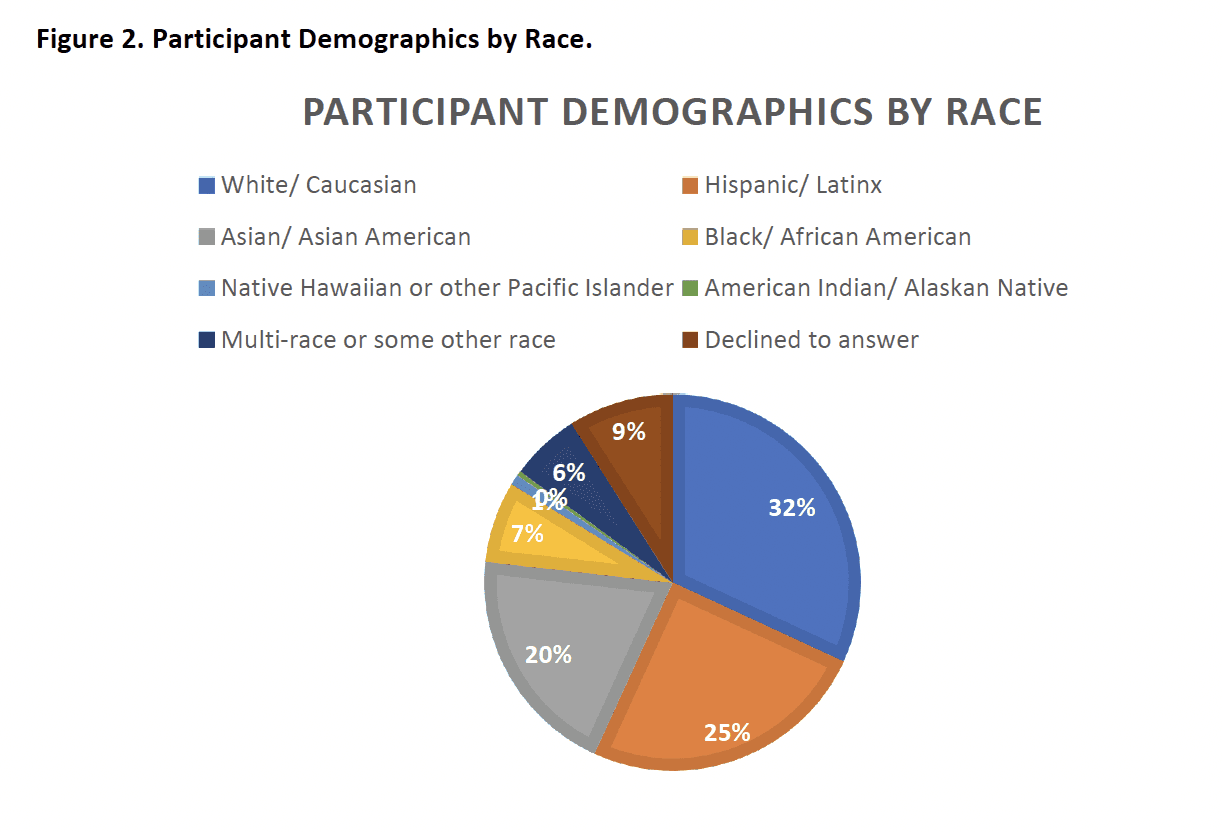
5 trainings · 8 PHS branches · 812+ staff · 3 Fiscals
Scope
Focus
Racial equity · DEI · Workforce development · Community health

Context
Why this work happened when it did
The murder of George Floyd in 2020 and the nationwide reckoning that followed made visible what public health data had long documented: Black individuals, mothers, and children consistently receive less care, face greater barriers to accessing services, and carry the weight of systemic and historical inequities that shape their health outcomes at every level.
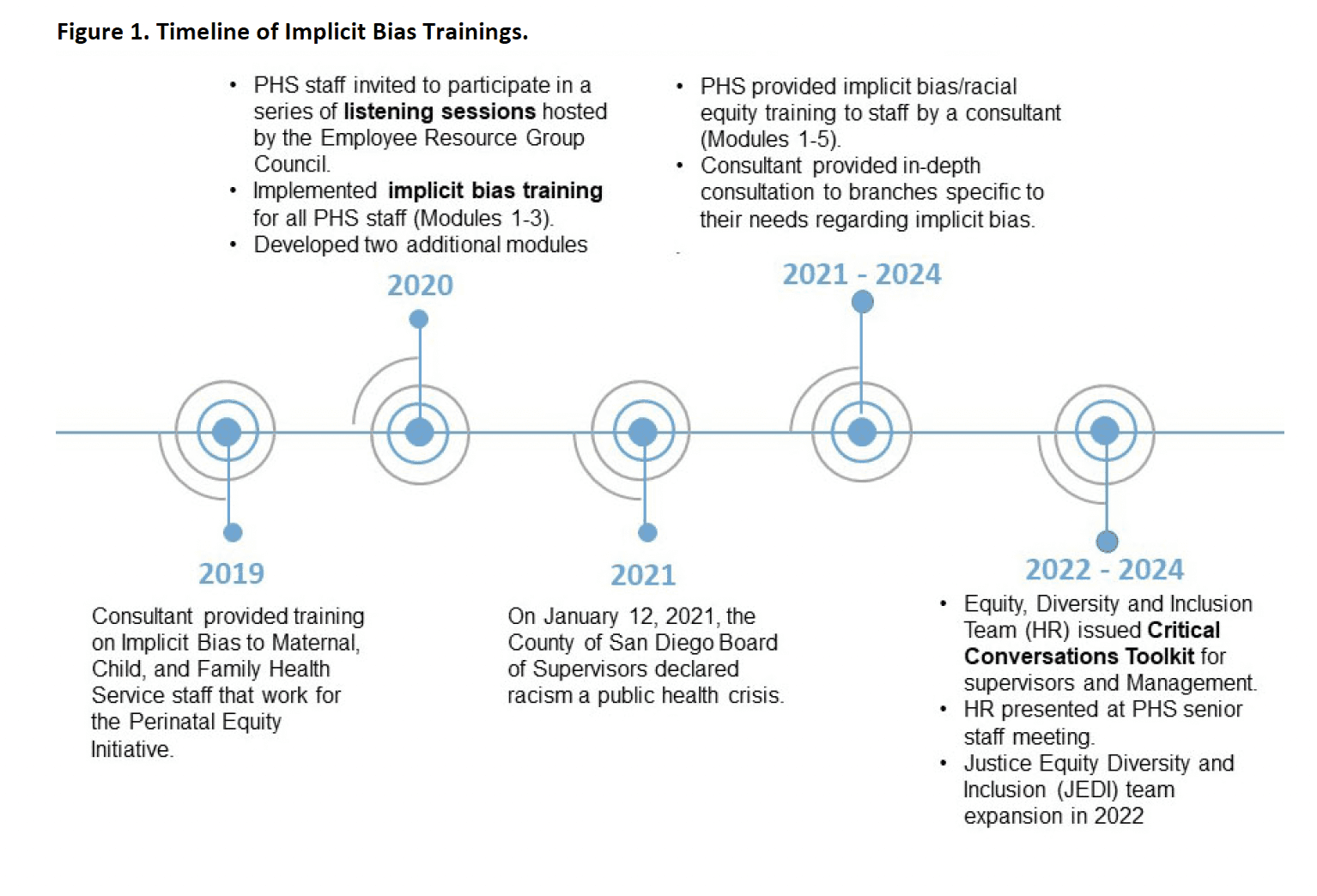
On January 12, 2021, the San Diego County Board of Supervisors formally declared racism a public health crisis, and on that same day, Public Health Services held its first racial equity training. The timing was not coincidental. For a department whose mission is to serve all 3.3 million county residents equitably, this was a moment of institutional commitment, not just acknowledgment.
The training initiative that followed was one of the most significant workforce development efforts in PHS history.
The Initiative
What the training program was designed to do
Public Health Services contracted with a racial equity expert to facilitate a five-part training series for all staff across the agency's eight branches. The series was designed to build a foundational, shared understanding of how racial inequity and implicit bias manifest in the policies, practices, and everyday operations of a public health organization.
The five modules covered:
Training 1: The Basics of Racial Equity — exploring how racial equity is essential to effective public health service delivery.
Training 2: Structural Racism — understanding the implications of structural racism on health and wellness.
Training 3: Privilege and Power — understanding positionality and its implications for racial equity.
Training 4: Dismantling Dehumanization — examining the history of dehumanization and pathways to dismantle it.
Training 5: What's the Link? Trauma and Racism — exploring the relationship between trauma and racism, and strategies to manage racial stress.
All trainings were held virtually and offered across all eight PHS branches. The series ran over three fiscal years, from January 2021 through June 2023.
My Role
Three years of measurable impact
Over the three-year initiative, the training reached the vast majority of PHS's 800+ person workforce across all eight branches.
By the end of the series, 61% of PHS staff had attended at least one racial equity training. With the continuation of the series into FY 2023-2024, it was estimated that at least 75% of PHS staff would complete the full five-part series.
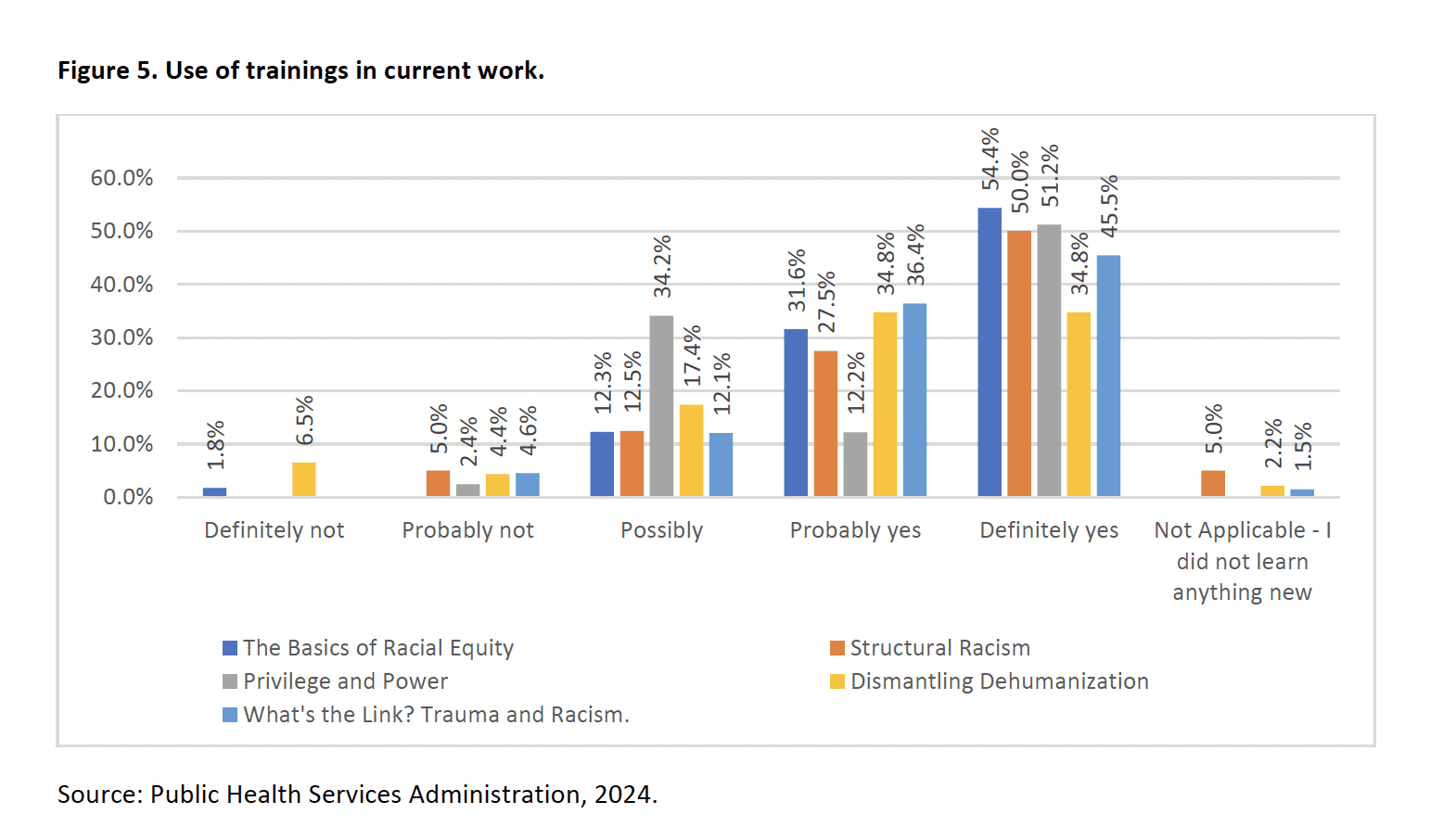
The data told a consistent story across all three years. Over 90% of participants who completed the evaluation survey strongly agreed or somewhat strongly agreed that the trainings impacted their knowledge of or perspective on racism and racial equity. Over 90% also reported learning new skills, strategies, concepts, or language to address racism and racial equity in their work.
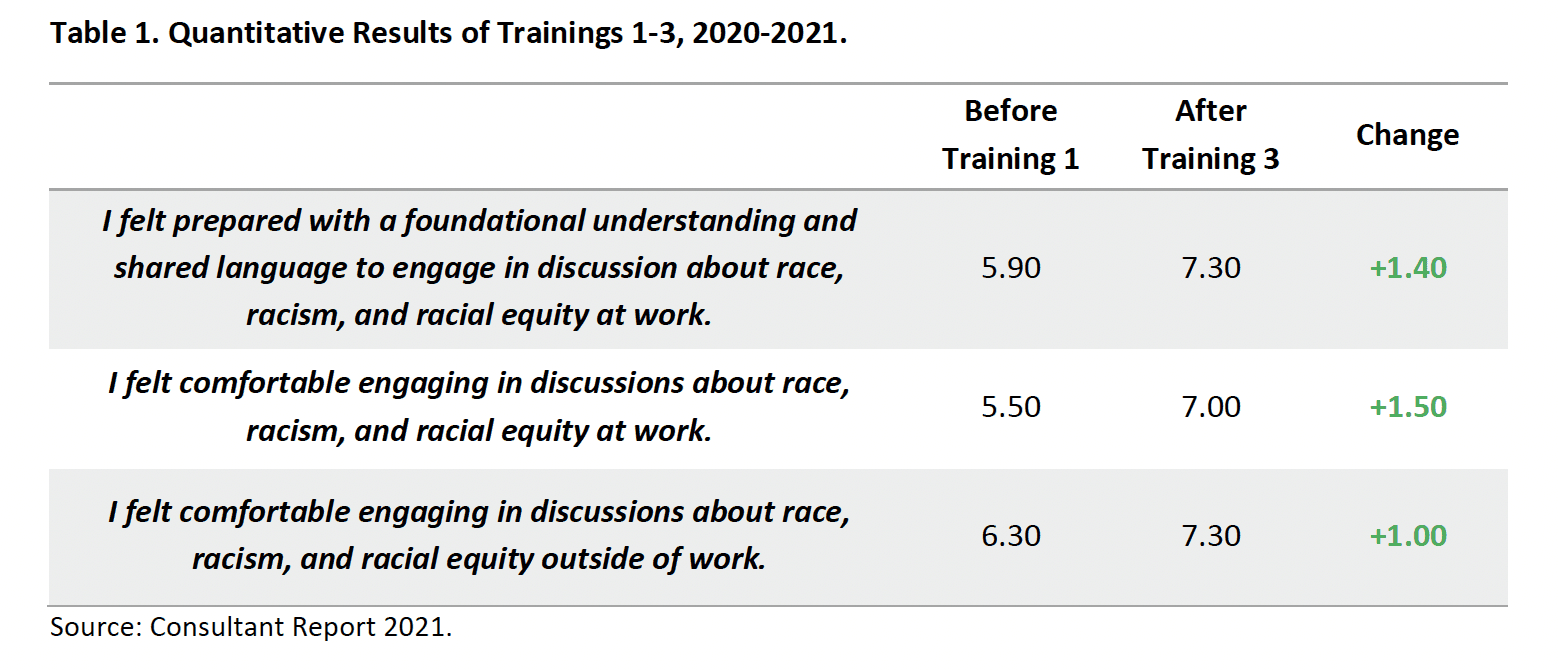
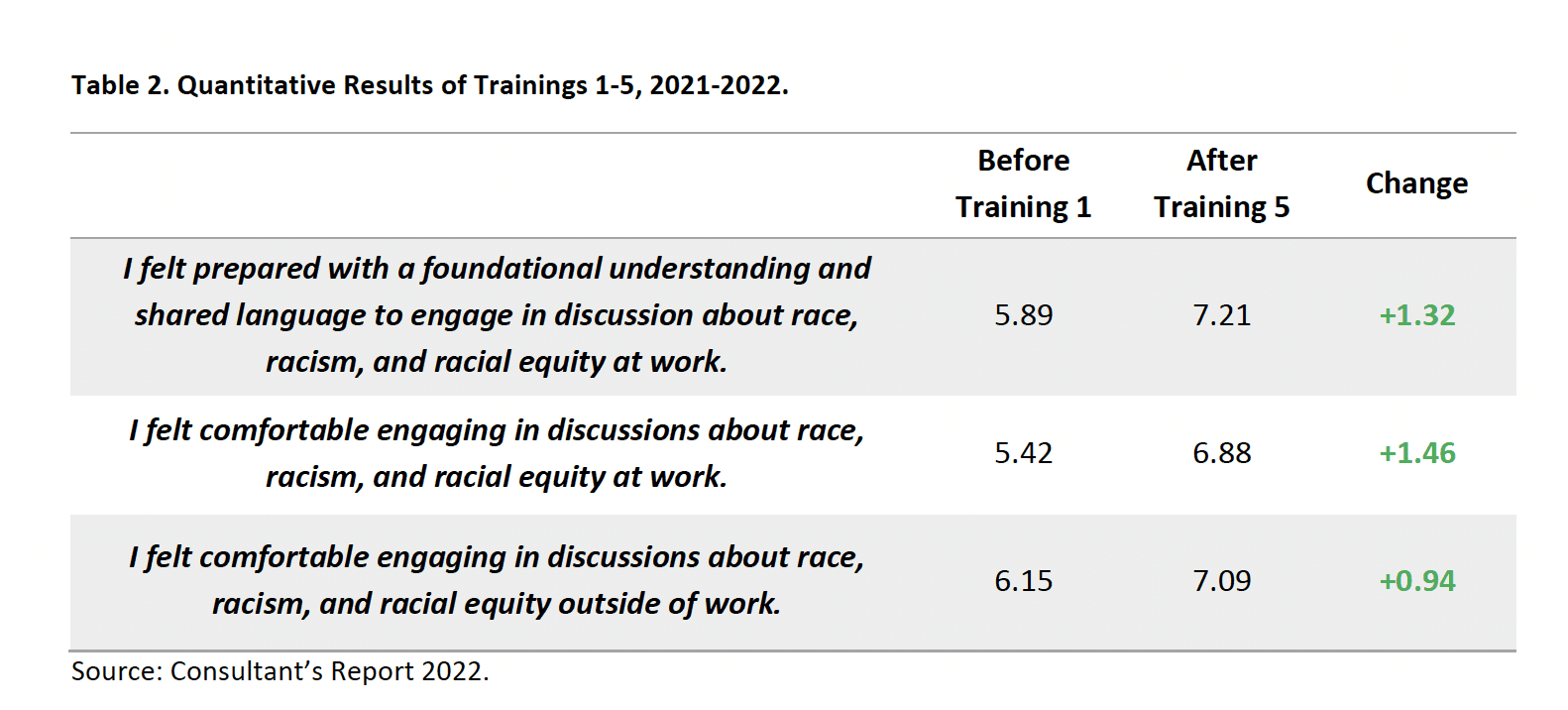
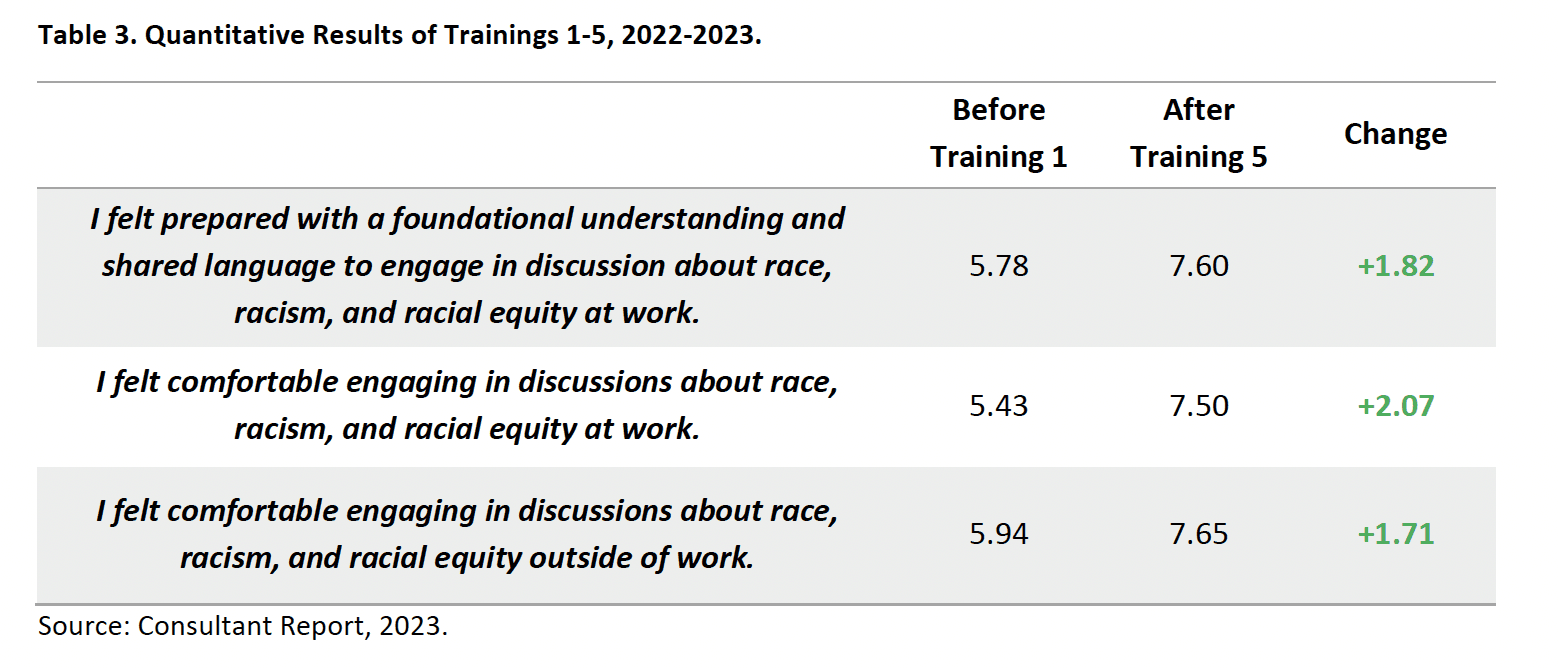
Pre and post training surveys showed meaningful increases in staff comfort and preparedness across all three measures tracked.
Year Three results, the strongest gains across all three years:
Feeling prepared with a foundational understanding to discuss race and racial equity at work increased from 5.78 to 7.60, a gain of 1.82 points. Comfort engaging in discussions about race at work increased from 5.43 to 7.50, a gain of 2.07 points. Comfort engaging in discussions about race outside of work increased from 5.94 to 7.65, a gain of 1.71 points.
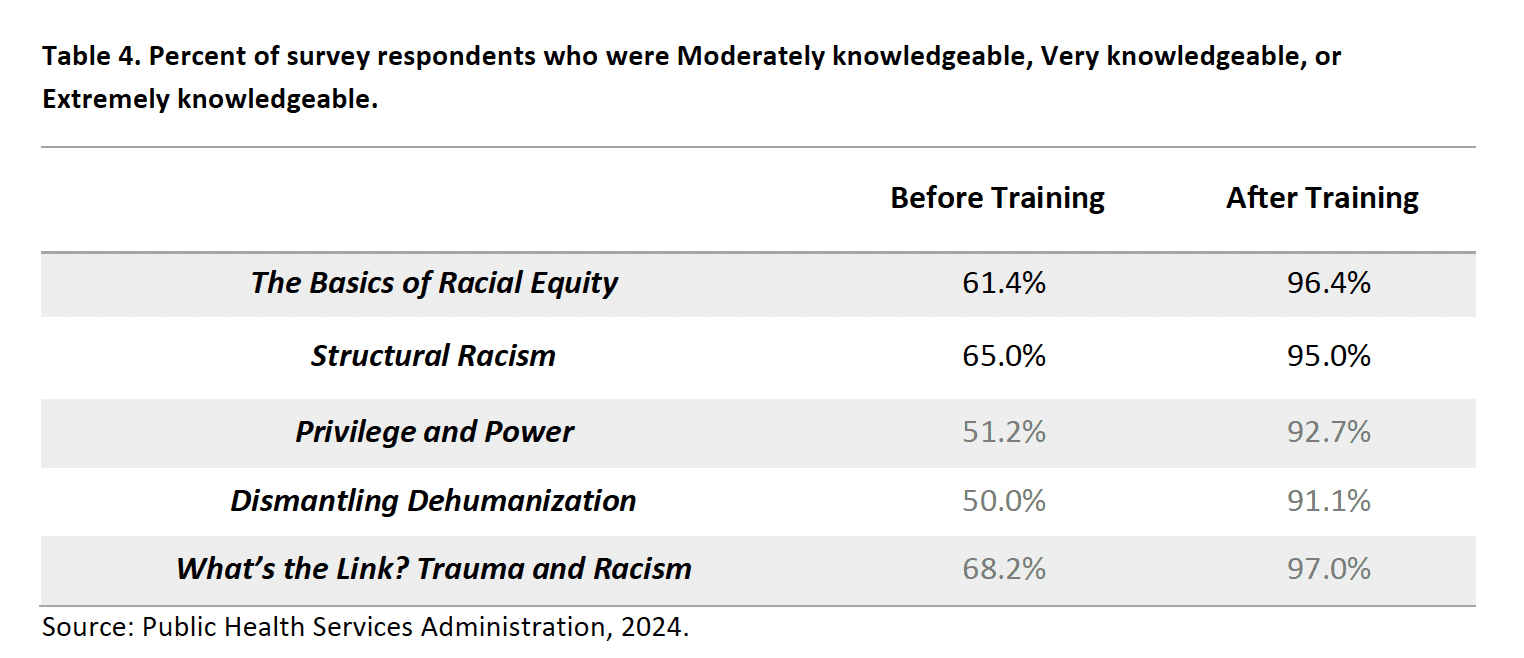
The greatest single-session impact came from the Privilege and Power training, which showed the highest pre-to-post increases across all three years.
Coordination, data, and outreach
LMS Training Coordination I served as a certified LMS Training Coordinator for the initiative, managing enrollment, drops, and training credits for participants across all branches. I tracked attendance for each session, sent reminders and confirmations, and helped facilitate virtual breakout rooms during sessions.
Data Tracking and Analysis Once the first three required trainings were complete, I compiled and analyzed attendance data from the LMS across all eight PHS branches. That analysis was prepared for the Public Health Officer, who used it to present the case to leadership for expanding the program from three to five sessions, a direct example of data informing program decisions.
Staff Outreach and Promotion I led direct email outreach to PHS staff through department distribution lists and targeted individual follow-ups to drive enrollment and keep participation numbers up across a multi-part virtual series.
What Staff Said
Coordination, data, and outreach
LMS Training Coordination I served as a certified LMS Training Coordinator for the initiative, managing enrollment, drops, and training credits for participants across all branches. I tracked attendance for each session, sent reminders and confirmations, and helped facilitate virtual breakout rooms during sessions.
Data Tracking and Analysis Once the first three required trainings were complete, I compiled and analyzed attendance data from the LMS across all eight PHS branches. That analysis was prepared for the Public Health Officer, who used it to present the case to leadership for expanding the program from three to five sessions, a direct example of data informing program decisions.
Staff Outreach and Promotion I led direct email outreach to PHS staff through department distribution lists and targeted individual follow-ups to drive enrollment and keep participation numbers up across a multi-part virtual series.
Coordination, data, and outreach
LMS Training Coordination I served as a certified LMS Training Coordinator for the initiative, managing enrollment, drops, and training credits for participants across all branches. I tracked attendance for each session, sent reminders and confirmations, and helped facilitate virtual breakout rooms during sessions.
Data Tracking and Analysis Once the first three required trainings were complete, I compiled and analyzed attendance data from the LMS across all eight PHS branches. That analysis was prepared for the Public Health Officer, who used it to present the case to leadership for expanding the program from three to five sessions, a direct example of data informing program decisions.
Staff Outreach and Promotion I led direct email outreach to PHS staff through department distribution lists and targeted individual follow-ups to drive enrollment and keep participation numbers up across a multi-part virtual series.
Coordination, data, and outreach
LMS Training Coordination I served as a certified LMS Training Coordinator for the initiative, managing enrollment, drops, and training credits for participants across all branches. I tracked attendance for each session, sent reminders and confirmations, and helped facilitate virtual breakout rooms during sessions.
Data Tracking and Analysis Once the first three required trainings were complete, I compiled and analyzed attendance data from the LMS across all eight PHS branches. That analysis was prepared for the Public Health Officer, who used it to present the case to leadership for expanding the program from three to five sessions, a direct example of data informing program decisions.
Staff Outreach and Promotion I led direct email outreach to PHS staff through department distribution lists and targeted individual follow-ups to drive enrollment and keep participation numbers up across a multi-part virtual series.
Three years of measurable impact
Over the three-year initiative, the training reached the vast majority of PHS's 800+ person workforce across all eight branches.
By the end of the series, 61% of PHS staff had attended at least one racial equity training. With the continuation of the series into FY 2023-2024, it was estimated that at least 75% of PHS staff would complete the full five-part series.
The data told a consistent story across all three years. Over 90% of participants who completed the evaluation survey strongly agreed or somewhat strongly agreed that the trainings impacted their knowledge of or perspective on racism and racial equity. Over 90% also reported learning new skills, strategies, concepts, or language to address racism and racial equity in their work.
Pre and post training surveys showed meaningful increases in staff comfort and preparedness across all three measures tracked.
Year Three results, the strongest gains across all three years:
Feeling prepared with a foundational understanding to discuss race and racial equity at work increased from 5.78 to 7.60, a gain of 1.82 points. Comfort engaging in discussions about race at work increased from 5.43 to 7.50, a gain of 2.07 points. Comfort engaging in discussions about race outside of work increased from 5.94 to 7.65, a gain of 1.71 points.
The greatest single-session impact came from the Privilege and Power training, which showed the highest pre-to-post increases across all three years.
What the Data Showed
Three years of measurable impact
Over the three-year initiative, the training reached the vast majority of PHS's 800+ person workforce across all eight branches.
By the end of the series, 61% of PHS staff had attended at least one racial equity training. With the continuation of the series into FY 2023-2024, it was estimated that at least 75% of PHS staff would complete the full five-part series.
The data told a consistent story across all three years. Over 90% of participants who completed the evaluation survey strongly agreed or somewhat strongly agreed that the trainings impacted their knowledge of or perspective on racism and racial equity. Over 90% also reported learning new skills, strategies, concepts, or language to address racism and racial equity in their work.
Pre and post training surveys showed meaningful increases in staff comfort and preparedness across all three measures tracked.
Year Three results, the strongest gains across all three years:
Feeling prepared with a foundational understanding to discuss race and racial equity at work increased from 5.78 to 7.60, a gain of 1.82 points. Comfort engaging in discussions about race at work increased from 5.43 to 7.50, a gain of 2.07 points. Comfort engaging in discussions about race outside of work increased from 5.94 to 7.65, a gain of 1.71 points.
The greatest single-session impact came from the Privilege and Power training, which showed the highest pre-to-post increases across all three years.
The human side of the data
The quantitative data was reinforced by the qualitative feedback staff shared after each session. Across all three years, a consistent theme emerged: the trainings created space for conversations that many staff had never been able to have in a professional setting.
Staff described the experience as eye-opening, as well as a space for growth and reflection. Many expressed wanting to continue the work beyond the training hours. One participant captured it plainly: the trainer's thought-provoking questions required time to reflect on after training, and the work of being anti-racist extends beyond the two hours in each session.
Others noted the impact on how they showed up for the communities PHS serves: one participant wrote that the training empowered them to speak up for prioritizing resources for those who need them most in the community.
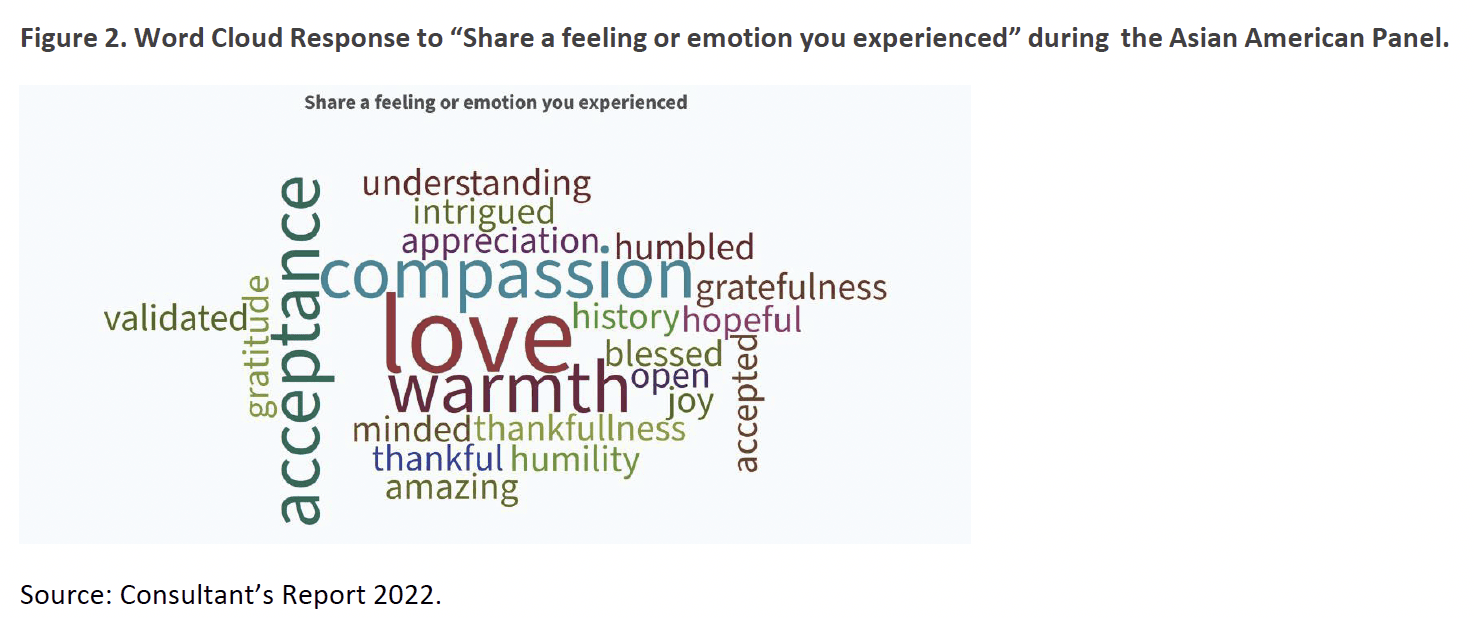
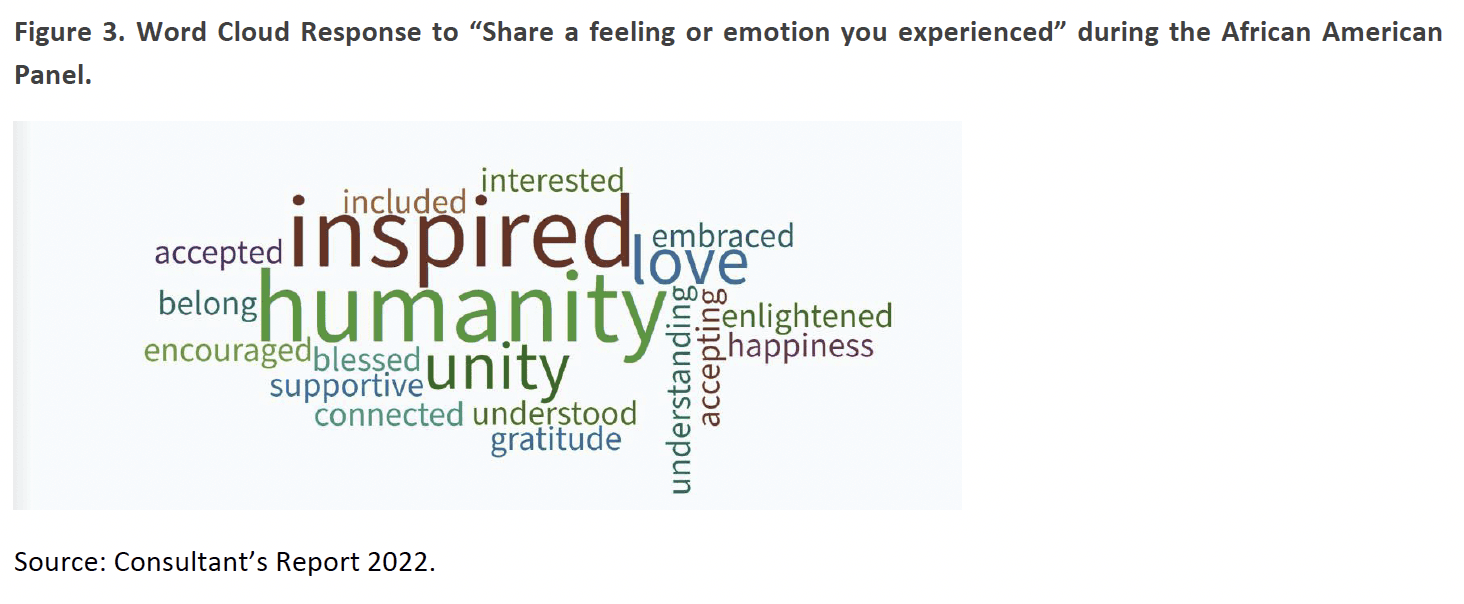
The qualitative feedback also drove real program improvements. In Year One, staff noted that the content focused heavily on Black and African American experiences while other communities, including Latinx and Asian American staff, felt less represented. PHS leadership worked directly with the consultant to broaden the content in Year Two, resulting in panel discussions featuring Asian American, African American, Latinx, and LGBTQ+ staff voices. The word clouds from those panels — dominated by words like "humanity," "inspired," "unity," "acceptance," and "compassion" — reflected how much the shift in approach mattered.
Co-Designing the Branch Statement
What Staff Said
The human side of the data
The quantitative data was reinforced by the qualitative feedback staff shared after each session. Across all three years, a consistent theme emerged: the trainings created space for conversations that many staff had never been able to have in a professional setting.
Staff described the experience as eye-opening, as well as a space for growth and reflection. Many expressed wanting to continue the work beyond the training hours. One participant captured it plainly: the trainer's thought-provoking questions required time to reflect on after training, and the work of being anti-racist extends beyond the two hours in each session.
Others noted the impact on how they showed up for the communities PHS serves: one participant wrote that the training empowered them to speak up for prioritizing resources for those who need them most in the community.
The qualitative feedback also drove real program improvements. In Year One, staff noted that the content focused heavily on Black and African American experiences while other communities, including Latinx and Asian American staff, felt less represented. PHS leadership worked directly with the consultant to broaden the content in Year Two, resulting in panel discussions featuring Asian American, African American, Latinx, and LGBTQ+ staff voices. The word clouds from those panels — dominated by words like "humanity," "inspired," "unity," "acceptance," and "compassion" — reflected how much the shift in approach mattered.
What Staff Said
From training to institutional commitment
After the training series concluded, the Maternal, Child and Family Health Services branch formed a dedicated committee to translate the values surfaced in the training into a concrete institutional commitment. I was part of that committee, which brought together program managers, epidemiologists, and branch leadership.
The process was collaborative throughout. We gathered staff surveys at the outset to inform initial drafting, and returned to branch employees at each stage to review and respond to the language being developed. The result was a revised branch mission statement centered on racial equity principles, paired with a framework for how program processes and initiatives across MCFHS would be designed and delivered, with equity built in at every step.
Scope and Reach
Co-Designing the Branch Statement
From training to institutional commitment
After the training series concluded, the Maternal, Child and Family Health Services branch formed a dedicated committee to translate the values surfaced in the training into a concrete institutional commitment. I was part of that committee, which brought together program managers, epidemiologists, and branch leadership.
The process was collaborative throughout. We gathered staff surveys at the outset to inform initial drafting, and returned to branch employees at each stage to review and respond to the language being developed. The result was a revised branch mission statement centered on racial equity principles, paired with a framework for how program processes and initiatives across MCFHS would be designed and delivered, with equity built in at every step.
Co-Designing the Branch Statement
The human side of the data
The quantitative data was reinforced by the qualitative feedback staff shared after each session. Across all three years, a consistent theme emerged: the trainings created space for conversations that many staff had never been able to have in a professional setting.
Staff described the experience as eye-opening, as well as a space for growth and reflection. Many expressed wanting to continue the work beyond the training hours. One participant captured it plainly: the trainer's thought-provoking questions required time to reflect on after training, and the work of being anti-racist extends beyond the two hours in each session.
Others noted the impact on how they showed up for the communities PHS serves: one participant wrote that the training empowered them to speak up for prioritizing resources for those who need them most in the community.
The qualitative feedback also drove real program improvements. In Year One, staff noted that the content focused heavily on Black and African American experiences while other communities, including Latinx and Asian American staff, felt less represented. PHS leadership worked directly with the consultant to broaden the content in Year Two, resulting in panel discussions featuring Asian American, African American, Latinx, and LGBTQ+ staff voices. The word clouds from those panels — dominated by words like "humanity," "inspired," "unity," "acceptance," and "compassion" — reflected how much the shift in approach mattered.
Scope and Reach
From training to institutional commitment
After the training series concluded, the Maternal, Child and Family Health Services branch formed a dedicated committee to translate the values surfaced in the training into a concrete institutional commitment. I was part of that committee, which brought together program managers, epidemiologists, and branch leadership.
The process was collaborative throughout. We gathered staff surveys at the outset to inform initial drafting, and returned to branch employees at each stage to review and respond to the language being developed. The result was a revised branch mission statement centered on racial equity principles, paired with a framework for how program processes and initiatives across MCFHS would be designed and delivered, with equity built in at every step.
Scope and Reach
Over three fiscal years this initiative reached staff across all eight PHS branches serving more than 3.3 million San Diego County residents. By the end of FY 2022-2023, over 60% of PHS staff had completed at least one training, with projections reaching 75% completion by the end of the extended series. Each of the five training modules reached between 57% and 68% of the total PHS workforce over the course of the initiative.
Reflection
What this work is really about
Racial equity work in a public health agency is not a program you implement and check off. It is a slow, careful, institutionally complex process of building shared understanding, making the case with data, and translating values into the actual systems and statements that govern how services reach communities.
The communities PHS serves, including Black families, Latinx families, and other communities navigating a healthcare system shaped by generations of structural exclusion, deserve an agency that does that work seriously and continuously. Being part of the team that helped move it forward, from attendance tracking and data analysis to branch mission statement co-design, is work that shapes how I approach everything I do in public service design.
Reflection
Reflection
Scope and Reach
Over three fiscal years this initiative reached staff across all eight PHS branches serving more than 3.3 million San Diego County residents. By the end of FY 2022-2023, over 60% of PHS staff had completed at least one training, with projections reaching 75% completion by the end of the extended series. Each of the five training modules reached between 57% and 68% of the total PHS workforce over the course of the initiative.
Over three fiscal years this initiative reached staff across all eight PHS branches serving more than 3.3 million San Diego County residents. By the end of FY 2022-2023, over 60% of PHS staff had completed at least one training, with projections reaching 75% completion by the end of the extended series. Each of the five training modules reached between 57% and 68% of the total PHS workforce over the course of the initiative.
Scope and Reach
Reflection
What this work is really about
Racial equity work in a public health agency is not a program you implement and check off. It is a slow, careful, institutionally complex process of building shared understanding, making the case with data, and translating values into the actual systems and statements that govern how services reach communities.
The communities PHS serves, including Black families, Latinx families, and other communities navigating a healthcare system shaped by generations of structural exclusion, deserve an agency that does that work seriously and continuously. Being part of the team that helped move it forward, from attendance tracking and data analysis to branch mission statement co-design, is work that shapes how I approach everything I do in public service design.
What this work is really about
Racial equity work in a public health agency is not a program you implement and check off. It is a slow, careful, institutionally complex process of building shared understanding, making the case with data, and translating values into the actual systems and statements that govern how services reach communities.
The communities PHS serves, including Black families, Latinx families, and other communities navigating a healthcare system shaped by generations of structural exclusion, deserve an agency that does that work seriously and continuously. Being part of the team that helped move it forward, from attendance tracking and data analysis to branch mission statement co-design, is work that shapes how I approach everything I do in public service design.

COSD Racial Equity Initiatives
COSD Racial Equity Initiatives
Workforce Development · Public Health Services · San Diego County Training Coordination · Data Analysis · LMS Administration · Staff Engagement · Co-Design
Workforce Development · Public Health Services · San Diego County Training Coordination · Data Analysis · LMS Administration · Staff Engagement · Co-Design
My Role
LMS Training Coordinator · Data Analyst · Committee Member
Organization
Public Health Services,
San Diego County HHSA
5 trainings · 8 PHS branches · 812+ staff · 3 Fiscals
Scope
Focus
Racial equity · DEI · Workforce development · Community health
Context
Why this work happened when it did
The murder of George Floyd in 2020 and the nationwide reckoning that followed made visible what public health data had long documented: Black individuals, mothers, and children consistently receive less care, face greater barriers to accessing services, and carry the weight of systemic and historical inequities that shape their health outcomes at every level.
On January 12, 2021, the San Diego County Board of Supervisors formally declared racism a public health crisis, and on that same day, Public Health Services held its first racial equity training. The timing was not coincidental. For a department whose mission is to serve all 3.3 million county residents equitably, this was a moment of institutional commitment, not just acknowledgment.
The training initiative that followed was one of the most significant workforce development efforts in PHS history.
The Initiative
What the training program was designed to do
Public Health Services contracted with a racial equity expert to facilitate a five-part training series for all staff across the agency's eight branches. The series was designed to build a foundational, shared understanding of how racial inequity and implicit bias manifest in the policies, practices, and everyday operations of a public health organization.
The five modules covered:
Training 1: The Basics of Racial Equity — exploring how racial equity is essential to effective public health service delivery.
Training 2: Structural Racism — understanding the implications of structural racism on health and wellness.
Training 3: Privilege and Power — understanding positionality and its implications for racial equity.
Training 4: Dismantling Dehumanization — examining the history of dehumanization and pathways to dismantle it.
Training 5: What's the Link? Trauma and Racism — exploring the relationship between trauma and racism, and strategies to manage racial stress.
All trainings were held virtually and offered across all eight PHS branches. The series ran over three fiscal years, from January 2021 through June 2023.
My Role
Three years of measurable impact
Over the three-year initiative, the training reached the vast majority of PHS's 800+ person workforce across all eight branches.
By the end of the series, 61% of PHS staff had attended at least one racial equity training. With the continuation of the series into FY 2023-2024, it was estimated that at least 75% of PHS staff would complete the full five-part series.
The data told a consistent story across all three years. Over 90% of participants who completed the evaluation survey strongly agreed or somewhat strongly agreed that the trainings impacted their knowledge of or perspective on racism and racial equity. Over 90% also reported learning new skills, strategies, concepts, or language to address racism and racial equity in their work.
Pre and post training surveys showed meaningful increases in staff comfort and preparedness across all three measures tracked.
Year Three results, the strongest gains across all three years:
Feeling prepared with a foundational understanding to discuss race and racial equity at work increased from 5.78 to 7.60, a gain of 1.82 points. Comfort engaging in discussions about race at work increased from 5.43 to 7.50, a gain of 2.07 points. Comfort engaging in discussions about race outside of work increased from 5.94 to 7.65, a gain of 1.71 points.
The greatest single-session impact came from the Privilege and Power training, which showed the highest pre-to-post increases across all three years.
Coordination, data, and outreach
LMS Training Coordination I served as a certified LMS Training Coordinator for the initiative, managing enrollment, drops, and training credits for participants across all branches. I tracked attendance for each session, sent reminders and confirmations, and helped facilitate virtual breakout rooms during sessions.
Data Tracking and Analysis Once the first three required trainings were complete, I compiled and analyzed attendance data from the LMS across all eight PHS branches. That analysis was prepared for the Public Health Officer, who used it to present the case to leadership for expanding the program from three to five sessions, a direct example of data informing program decisions.
Staff Outreach and Promotion I led direct email outreach to PHS staff through department distribution lists and targeted individual follow-ups to drive enrollment and keep participation numbers up across a multi-part virtual series.
What Staff Said
Coordination, data, and outreach
LMS Training Coordination I served as a certified LMS Training Coordinator for the initiative, managing enrollment, drops, and training credits for participants across all branches. I tracked attendance for each session, sent reminders and confirmations, and helped facilitate virtual breakout rooms during sessions.
Data Tracking and Analysis Once the first three required trainings were complete, I compiled and analyzed attendance data from the LMS across all eight PHS branches. That analysis was prepared for the Public Health Officer, who used it to present the case to leadership for expanding the program from three to five sessions, a direct example of data informing program decisions.
Staff Outreach and Promotion I led direct email outreach to PHS staff through department distribution lists and targeted individual follow-ups to drive enrollment and keep participation numbers up across a multi-part virtual series.
Coordination, data, and outreach
LMS Training Coordination I served as a certified LMS Training Coordinator for the initiative, managing enrollment, drops, and training credits for participants across all branches. I tracked attendance for each session, sent reminders and confirmations, and helped facilitate virtual breakout rooms during sessions.
Data Tracking and Analysis Once the first three required trainings were complete, I compiled and analyzed attendance data from the LMS across all eight PHS branches. That analysis was prepared for the Public Health Officer, who used it to present the case to leadership for expanding the program from three to five sessions, a direct example of data informing program decisions.
Staff Outreach and Promotion I led direct email outreach to PHS staff through department distribution lists and targeted individual follow-ups to drive enrollment and keep participation numbers up across a multi-part virtual series.
Coordination, data, and outreach
LMS Training Coordination I served as a certified LMS Training Coordinator for the initiative, managing enrollment, drops, and training credits for participants across all branches. I tracked attendance for each session, sent reminders and confirmations, and helped facilitate virtual breakout rooms during sessions.
Data Tracking and Analysis Once the first three required trainings were complete, I compiled and analyzed attendance data from the LMS across all eight PHS branches. That analysis was prepared for the Public Health Officer, who used it to present the case to leadership for expanding the program from three to five sessions, a direct example of data informing program decisions.
Staff Outreach and Promotion I led direct email outreach to PHS staff through department distribution lists and targeted individual follow-ups to drive enrollment and keep participation numbers up across a multi-part virtual series.
Three years of measurable impact
Over the three-year initiative, the training reached the vast majority of PHS's 800+ person workforce across all eight branches.
By the end of the series, 61% of PHS staff had attended at least one racial equity training. With the continuation of the series into FY 2023-2024, it was estimated that at least 75% of PHS staff would complete the full five-part series.
The data told a consistent story across all three years. Over 90% of participants who completed the evaluation survey strongly agreed or somewhat strongly agreed that the trainings impacted their knowledge of or perspective on racism and racial equity. Over 90% also reported learning new skills, strategies, concepts, or language to address racism and racial equity in their work.
Pre and post training surveys showed meaningful increases in staff comfort and preparedness across all three measures tracked.
Year Three results, the strongest gains across all three years:
Feeling prepared with a foundational understanding to discuss race and racial equity at work increased from 5.78 to 7.60, a gain of 1.82 points. Comfort engaging in discussions about race at work increased from 5.43 to 7.50, a gain of 2.07 points. Comfort engaging in discussions about race outside of work increased from 5.94 to 7.65, a gain of 1.71 points.
The greatest single-session impact came from the Privilege and Power training, which showed the highest pre-to-post increases across all three years.
What the Data Showed
Three years of measurable impact
Over the three-year initiative, the training reached the vast majority of PHS's 800+ person workforce across all eight branches.
By the end of the series, 61% of PHS staff had attended at least one racial equity training. With the continuation of the series into FY 2023-2024, it was estimated that at least 75% of PHS staff would complete the full five-part series.
The data told a consistent story across all three years. Over 90% of participants who completed the evaluation survey strongly agreed or somewhat strongly agreed that the trainings impacted their knowledge of or perspective on racism and racial equity. Over 90% also reported learning new skills, strategies, concepts, or language to address racism and racial equity in their work.
Pre and post training surveys showed meaningful increases in staff comfort and preparedness across all three measures tracked.
Year Three results, the strongest gains across all three years:
Feeling prepared with a foundational understanding to discuss race and racial equity at work increased from 5.78 to 7.60, a gain of 1.82 points. Comfort engaging in discussions about race at work increased from 5.43 to 7.50, a gain of 2.07 points. Comfort engaging in discussions about race outside of work increased from 5.94 to 7.65, a gain of 1.71 points.
The greatest single-session impact came from the Privilege and Power training, which showed the highest pre-to-post increases across all three years.
The human side of the data
The quantitative data was reinforced by the qualitative feedback staff shared after each session. Across all three years, a consistent theme emerged: the trainings created space for conversations that many staff had never been able to have in a professional setting.
Staff described the experience as eye-opening, as well as a space for growth and reflection. Many expressed wanting to continue the work beyond the training hours. One participant captured it plainly: the trainer's thought-provoking questions required time to reflect on after training, and the work of being anti-racist extends beyond the two hours in each session.
Others noted the impact on how they showed up for the communities PHS serves: one participant wrote that the training empowered them to speak up for prioritizing resources for those who need them most in the community.
The qualitative feedback also drove real program improvements. In Year One, staff noted that the content focused heavily on Black and African American experiences while other communities, including Latinx and Asian American staff, felt less represented. PHS leadership worked directly with the consultant to broaden the content in Year Two, resulting in panel discussions featuring Asian American, African American, Latinx, and LGBTQ+ staff voices. The word clouds from those panels — dominated by words like "humanity," "inspired," "unity," "acceptance," and "compassion" — reflected how much the shift in approach mattered.
Co-Designing the Branch Statement
What Staff Said
The human side of the data
The quantitative data was reinforced by the qualitative feedback staff shared after each session. Across all three years, a consistent theme emerged: the trainings created space for conversations that many staff had never been able to have in a professional setting.
Staff described the experience as eye-opening, as well as a space for growth and reflection. Many expressed wanting to continue the work beyond the training hours. One participant captured it plainly: the trainer's thought-provoking questions required time to reflect on after training, and the work of being anti-racist extends beyond the two hours in each session.
Others noted the impact on how they showed up for the communities PHS serves: one participant wrote that the training empowered them to speak up for prioritizing resources for those who need them most in the community.
The qualitative feedback also drove real program improvements. In Year One, staff noted that the content focused heavily on Black and African American experiences while other communities, including Latinx and Asian American staff, felt less represented. PHS leadership worked directly with the consultant to broaden the content in Year Two, resulting in panel discussions featuring Asian American, African American, Latinx, and LGBTQ+ staff voices. The word clouds from those panels — dominated by words like "humanity," "inspired," "unity," "acceptance," and "compassion" — reflected how much the shift in approach mattered.
What Staff Said
From training to institutional commitment
After the training series concluded, the Maternal, Child and Family Health Services branch formed a dedicated committee to translate the values surfaced in the training into a concrete institutional commitment. I was part of that committee, which brought together program managers, epidemiologists, and branch leadership.
The process was collaborative throughout. We gathered staff surveys at the outset to inform initial drafting, and returned to branch employees at each stage to review and respond to the language being developed. The result was a revised branch mission statement centered on racial equity principles, paired with a framework for how program processes and initiatives across MCFHS would be designed and delivered, with equity built in at every step.
Scope and Reach
Co-Designing the Branch Statement
From training to institutional commitment
After the training series concluded, the Maternal, Child and Family Health Services branch formed a dedicated committee to translate the values surfaced in the training into a concrete institutional commitment. I was part of that committee, which brought together program managers, epidemiologists, and branch leadership.
The process was collaborative throughout. We gathered staff surveys at the outset to inform initial drafting, and returned to branch employees at each stage to review and respond to the language being developed. The result was a revised branch mission statement centered on racial equity principles, paired with a framework for how program processes and initiatives across MCFHS would be designed and delivered, with equity built in at every step.
Co-Designing the Branch Statement
The human side of the data
The quantitative data was reinforced by the qualitative feedback staff shared after each session. Across all three years, a consistent theme emerged: the trainings created space for conversations that many staff had never been able to have in a professional setting.
Staff described the experience as eye-opening, as well as a space for growth and reflection. Many expressed wanting to continue the work beyond the training hours. One participant captured it plainly: the trainer's thought-provoking questions required time to reflect on after training, and the work of being anti-racist extends beyond the two hours in each session.
Others noted the impact on how they showed up for the communities PHS serves: one participant wrote that the training empowered them to speak up for prioritizing resources for those who need them most in the community.
The qualitative feedback also drove real program improvements. In Year One, staff noted that the content focused heavily on Black and African American experiences while other communities, including Latinx and Asian American staff, felt less represented. PHS leadership worked directly with the consultant to broaden the content in Year Two, resulting in panel discussions featuring Asian American, African American, Latinx, and LGBTQ+ staff voices. The word clouds from those panels — dominated by words like "humanity," "inspired," "unity," "acceptance," and "compassion" — reflected how much the shift in approach mattered.
Scope and Reach
From training to institutional commitment
After the training series concluded, the Maternal, Child and Family Health Services branch formed a dedicated committee to translate the values surfaced in the training into a concrete institutional commitment. I was part of that committee, which brought together program managers, epidemiologists, and branch leadership.
The process was collaborative throughout. We gathered staff surveys at the outset to inform initial drafting, and returned to branch employees at each stage to review and respond to the language being developed. The result was a revised branch mission statement centered on racial equity principles, paired with a framework for how program processes and initiatives across MCFHS would be designed and delivered, with equity built in at every step.
Scope and Reach
Over three fiscal years this initiative reached staff across all eight PHS branches serving more than 3.3 million San Diego County residents. By the end of FY 2022-2023, over 60% of PHS staff had completed at least one training, with projections reaching 75% completion by the end of the extended series. Each of the five training modules reached between 57% and 68% of the total PHS workforce over the course of the initiative.
Reflection
What this work is really about
Racial equity work in a public health agency is not a program you implement and check off. It is a slow, careful, institutionally complex process of building shared understanding, making the case with data, and translating values into the actual systems and statements that govern how services reach communities.
The communities PHS serves, including Black families, Latinx families, and other communities navigating a healthcare system shaped by generations of structural exclusion, deserve an agency that does that work seriously and continuously. Being part of the team that helped move it forward, from attendance tracking and data analysis to branch mission statement co-design, is work that shapes how I approach everything I do in public service design.
Reflection
Reflection
Scope and Reach
Over three fiscal years this initiative reached staff across all eight PHS branches serving more than 3.3 million San Diego County residents. By the end of FY 2022-2023, over 60% of PHS staff had completed at least one training, with projections reaching 75% completion by the end of the extended series. Each of the five training modules reached between 57% and 68% of the total PHS workforce over the course of the initiative.
Over three fiscal years this initiative reached staff across all eight PHS branches serving more than 3.3 million San Diego County residents. By the end of FY 2022-2023, over 60% of PHS staff had completed at least one training, with projections reaching 75% completion by the end of the extended series. Each of the five training modules reached between 57% and 68% of the total PHS workforce over the course of the initiative.
Scope and Reach
Reflection
What this work is really about
Racial equity work in a public health agency is not a program you implement and check off. It is a slow, careful, institutionally complex process of building shared understanding, making the case with data, and translating values into the actual systems and statements that govern how services reach communities.
The communities PHS serves, including Black families, Latinx families, and other communities navigating a healthcare system shaped by generations of structural exclusion, deserve an agency that does that work seriously and continuously. Being part of the team that helped move it forward, from attendance tracking and data analysis to branch mission statement co-design, is work that shapes how I approach everything I do in public service design.
What this work is really about
Racial equity work in a public health agency is not a program you implement and check off. It is a slow, careful, institutionally complex process of building shared understanding, making the case with data, and translating values into the actual systems and statements that govern how services reach communities.
The communities PHS serves, including Black families, Latinx families, and other communities navigating a healthcare system shaped by generations of structural exclusion, deserve an agency that does that work seriously and continuously. Being part of the team that helped move it forward, from attendance tracking and data analysis to branch mission statement co-design, is work that shapes how I approach everything I do in public service design.
COSD Racial Equity Initiatives
COSD Racial Equity Initiatives
Workforce Development · Public Health Services · San Diego County Training Coordination · Data Analysis · LMS Administration · Staff Engagement · Co-Design
Workforce Development · Public Health Services · San Diego County Training Coordination · Data Analysis · LMS Administration · Staff Engagement · Co-Design
My Role
LMS Training Coordinator · Data Analyst · Committee Member
Organization
Public Health Services,
San Diego County HHSA
5 trainings · 8 PHS branches · 812+ staff · 3 Fiscals
Scope
Focus
Racial equity · DEI · Workforce development · Community health
Context
Why this work happened when it did
The murder of George Floyd in 2020 and the nationwide reckoning that followed made visible what public health data had long documented: Black individuals, mothers, and children consistently receive less care, face greater barriers to accessing services, and carry the weight of systemic and historical inequities that shape their health outcomes at every level.
On January 12, 2021, the San Diego County Board of Supervisors formally declared racism a public health crisis, and on that same day, Public Health Services held its first racial equity training. The timing was not coincidental. For a department whose mission is to serve all 3.3 million county residents equitably, this was a moment of institutional commitment, not just acknowledgment.
The training initiative that followed was one of the most significant workforce development efforts in PHS history.
The Initiative
What the training program was designed to do
Public Health Services contracted with a racial equity expert to facilitate a five-part training series for all staff across the agency's eight branches. The series was designed to build a foundational, shared understanding of how racial inequity and implicit bias manifest in the policies, practices, and everyday operations of a public health organization.
The five modules covered:
Training 1: The Basics of Racial Equity — exploring how racial equity is essential to effective public health service delivery.
Training 2: Structural Racism — understanding the implications of structural racism on health and wellness.
Training 3: Privilege and Power — understanding positionality and its implications for racial equity.
Training 4: Dismantling Dehumanization — examining the history of dehumanization and pathways to dismantle it.
Training 5: What's the Link? Trauma and Racism — exploring the relationship between trauma and racism, and strategies to manage racial stress.
All trainings were held virtually and offered across all eight PHS branches. The series ran over three fiscal years, from January 2021 through June 2023.
My Role
Three years of measurable impact
Over the three-year initiative, the training reached the vast majority of PHS's 800+ person workforce across all eight branches.
By the end of the series, 61% of PHS staff had attended at least one racial equity training. With the continuation of the series into FY 2023-2024, it was estimated that at least 75% of PHS staff would complete the full five-part series.
The data told a consistent story across all three years. Over 90% of participants who completed the evaluation survey strongly agreed or somewhat strongly agreed that the trainings impacted their knowledge of or perspective on racism and racial equity. Over 90% also reported learning new skills, strategies, concepts, or language to address racism and racial equity in their work.
Pre and post training surveys showed meaningful increases in staff comfort and preparedness across all three measures tracked.
Year Three results, the strongest gains across all three years:
Feeling prepared with a foundational understanding to discuss race and racial equity at work increased from 5.78 to 7.60, a gain of 1.82 points. Comfort engaging in discussions about race at work increased from 5.43 to 7.50, a gain of 2.07 points. Comfort engaging in discussions about race outside of work increased from 5.94 to 7.65, a gain of 1.71 points.
The greatest single-session impact came from the Privilege and Power training, which showed the highest pre-to-post increases across all three years.
Coordination, data, and outreach
LMS Training Coordination I served as a certified LMS Training Coordinator for the initiative, managing enrollment, drops, and training credits for participants across all branches. I tracked attendance for each session, sent reminders and confirmations, and helped facilitate virtual breakout rooms during sessions.
Data Tracking and Analysis Once the first three required trainings were complete, I compiled and analyzed attendance data from the LMS across all eight PHS branches. That analysis was prepared for the Public Health Officer, who used it to present the case to leadership for expanding the program from three to five sessions, a direct example of data informing program decisions.
Staff Outreach and Promotion I led direct email outreach to PHS staff through department distribution lists and targeted individual follow-ups to drive enrollment and keep participation numbers up across a multi-part virtual series.
What Staff Said
Coordination, data, and outreach
LMS Training Coordination I served as a certified LMS Training Coordinator for the initiative, managing enrollment, drops, and training credits for participants across all branches. I tracked attendance for each session, sent reminders and confirmations, and helped facilitate virtual breakout rooms during sessions.
Data Tracking and Analysis Once the first three required trainings were complete, I compiled and analyzed attendance data from the LMS across all eight PHS branches. That analysis was prepared for the Public Health Officer, who used it to present the case to leadership for expanding the program from three to five sessions, a direct example of data informing program decisions.
Staff Outreach and Promotion I led direct email outreach to PHS staff through department distribution lists and targeted individual follow-ups to drive enrollment and keep participation numbers up across a multi-part virtual series.
Coordination, data, and outreach
LMS Training Coordination I served as a certified LMS Training Coordinator for the initiative, managing enrollment, drops, and training credits for participants across all branches. I tracked attendance for each session, sent reminders and confirmations, and helped facilitate virtual breakout rooms during sessions.
Data Tracking and Analysis Once the first three required trainings were complete, I compiled and analyzed attendance data from the LMS across all eight PHS branches. That analysis was prepared for the Public Health Officer, who used it to present the case to leadership for expanding the program from three to five sessions, a direct example of data informing program decisions.
Staff Outreach and Promotion I led direct email outreach to PHS staff through department distribution lists and targeted individual follow-ups to drive enrollment and keep participation numbers up across a multi-part virtual series.
Coordination, data, and outreach
LMS Training Coordination I served as a certified LMS Training Coordinator for the initiative, managing enrollment, drops, and training credits for participants across all branches. I tracked attendance for each session, sent reminders and confirmations, and helped facilitate virtual breakout rooms during sessions.
Data Tracking and Analysis Once the first three required trainings were complete, I compiled and analyzed attendance data from the LMS across all eight PHS branches. That analysis was prepared for the Public Health Officer, who used it to present the case to leadership for expanding the program from three to five sessions, a direct example of data informing program decisions.
Staff Outreach and Promotion I led direct email outreach to PHS staff through department distribution lists and targeted individual follow-ups to drive enrollment and keep participation numbers up across a multi-part virtual series.
Three years of measurable impact
Over the three-year initiative, the training reached the vast majority of PHS's 800+ person workforce across all eight branches.
By the end of the series, 61% of PHS staff had attended at least one racial equity training. With the continuation of the series into FY 2023-2024, it was estimated that at least 75% of PHS staff would complete the full five-part series.
The data told a consistent story across all three years. Over 90% of participants who completed the evaluation survey strongly agreed or somewhat strongly agreed that the trainings impacted their knowledge of or perspective on racism and racial equity. Over 90% also reported learning new skills, strategies, concepts, or language to address racism and racial equity in their work.
Pre and post training surveys showed meaningful increases in staff comfort and preparedness across all three measures tracked.
Year Three results, the strongest gains across all three years:
Feeling prepared with a foundational understanding to discuss race and racial equity at work increased from 5.78 to 7.60, a gain of 1.82 points. Comfort engaging in discussions about race at work increased from 5.43 to 7.50, a gain of 2.07 points. Comfort engaging in discussions about race outside of work increased from 5.94 to 7.65, a gain of 1.71 points.
The greatest single-session impact came from the Privilege and Power training, which showed the highest pre-to-post increases across all three years.
What the Data Showed
Three years of measurable impact
Over the three-year initiative, the training reached the vast majority of PHS's 800+ person workforce across all eight branches.
By the end of the series, 61% of PHS staff had attended at least one racial equity training. With the continuation of the series into FY 2023-2024, it was estimated that at least 75% of PHS staff would complete the full five-part series.
The data told a consistent story across all three years. Over 90% of participants who completed the evaluation survey strongly agreed or somewhat strongly agreed that the trainings impacted their knowledge of or perspective on racism and racial equity. Over 90% also reported learning new skills, strategies, concepts, or language to address racism and racial equity in their work.
Pre and post training surveys showed meaningful increases in staff comfort and preparedness across all three measures tracked.
Year Three results, the strongest gains across all three years:
Feeling prepared with a foundational understanding to discuss race and racial equity at work increased from 5.78 to 7.60, a gain of 1.82 points. Comfort engaging in discussions about race at work increased from 5.43 to 7.50, a gain of 2.07 points. Comfort engaging in discussions about race outside of work increased from 5.94 to 7.65, a gain of 1.71 points.
The greatest single-session impact came from the Privilege and Power training, which showed the highest pre-to-post increases across all three years.
The human side of the data
The quantitative data was reinforced by the qualitative feedback staff shared after each session. Across all three years, a consistent theme emerged: the trainings created space for conversations that many staff had never been able to have in a professional setting.
Staff described the experience as eye-opening, as well as a space for growth and reflection. Many expressed wanting to continue the work beyond the training hours. One participant captured it plainly: the trainer's thought-provoking questions required time to reflect on after training, and the work of being anti-racist extends beyond the two hours in each session.
Others noted the impact on how they showed up for the communities PHS serves: one participant wrote that the training empowered them to speak up for prioritizing resources for those who need them most in the community.
The qualitative feedback also drove real program improvements. In Year One, staff noted that the content focused heavily on Black and African American experiences while other communities, including Latinx and Asian American staff, felt less represented. PHS leadership worked directly with the consultant to broaden the content in Year Two, resulting in panel discussions featuring Asian American, African American, Latinx, and LGBTQ+ staff voices. The word clouds from those panels — dominated by words like "humanity," "inspired," "unity," "acceptance," and "compassion" — reflected how much the shift in approach mattered.
Co-Designing the Branch Statement
What Staff Said
The human side of the data
The quantitative data was reinforced by the qualitative feedback staff shared after each session. Across all three years, a consistent theme emerged: the trainings created space for conversations that many staff had never been able to have in a professional setting.
Staff described the experience as eye-opening, as well as a space for growth and reflection. Many expressed wanting to continue the work beyond the training hours. One participant captured it plainly: the trainer's thought-provoking questions required time to reflect on after training, and the work of being anti-racist extends beyond the two hours in each session.
Others noted the impact on how they showed up for the communities PHS serves: one participant wrote that the training empowered them to speak up for prioritizing resources for those who need them most in the community.
The qualitative feedback also drove real program improvements. In Year One, staff noted that the content focused heavily on Black and African American experiences while other communities, including Latinx and Asian American staff, felt less represented. PHS leadership worked directly with the consultant to broaden the content in Year Two, resulting in panel discussions featuring Asian American, African American, Latinx, and LGBTQ+ staff voices. The word clouds from those panels — dominated by words like "humanity," "inspired," "unity," "acceptance," and "compassion" — reflected how much the shift in approach mattered.
What Staff Said
From training to institutional commitment
After the training series concluded, the Maternal, Child and Family Health Services branch formed a dedicated committee to translate the values surfaced in the training into a concrete institutional commitment. I was part of that committee, which brought together program managers, epidemiologists, and branch leadership.
The process was collaborative throughout. We gathered staff surveys at the outset to inform initial drafting, and returned to branch employees at each stage to review and respond to the language being developed. The result was a revised branch mission statement centered on racial equity principles, paired with a framework for how program processes and initiatives across MCFHS would be designed and delivered, with equity built in at every step.
Scope and Reach
Co-Designing the Branch Statement
From training to institutional commitment
After the training series concluded, the Maternal, Child and Family Health Services branch formed a dedicated committee to translate the values surfaced in the training into a concrete institutional commitment. I was part of that committee, which brought together program managers, epidemiologists, and branch leadership.
The process was collaborative throughout. We gathered staff surveys at the outset to inform initial drafting, and returned to branch employees at each stage to review and respond to the language being developed. The result was a revised branch mission statement centered on racial equity principles, paired with a framework for how program processes and initiatives across MCFHS would be designed and delivered, with equity built in at every step.
Co-Designing the Branch Statement
The human side of the data
The quantitative data was reinforced by the qualitative feedback staff shared after each session. Across all three years, a consistent theme emerged: the trainings created space for conversations that many staff had never been able to have in a professional setting.
Staff described the experience as eye-opening, as well as a space for growth and reflection. Many expressed wanting to continue the work beyond the training hours. One participant captured it plainly: the trainer's thought-provoking questions required time to reflect on after training, and the work of being anti-racist extends beyond the two hours in each session.
Others noted the impact on how they showed up for the communities PHS serves: one participant wrote that the training empowered them to speak up for prioritizing resources for those who need them most in the community.
The qualitative feedback also drove real program improvements. In Year One, staff noted that the content focused heavily on Black and African American experiences while other communities, including Latinx and Asian American staff, felt less represented. PHS leadership worked directly with the consultant to broaden the content in Year Two, resulting in panel discussions featuring Asian American, African American, Latinx, and LGBTQ+ staff voices. The word clouds from those panels — dominated by words like "humanity," "inspired," "unity," "acceptance," and "compassion" — reflected how much the shift in approach mattered.
Scope and Reach
From training to institutional commitment
After the training series concluded, the Maternal, Child and Family Health Services branch formed a dedicated committee to translate the values surfaced in the training into a concrete institutional commitment. I was part of that committee, which brought together program managers, epidemiologists, and branch leadership.
The process was collaborative throughout. We gathered staff surveys at the outset to inform initial drafting, and returned to branch employees at each stage to review and respond to the language being developed. The result was a revised branch mission statement centered on racial equity principles, paired with a framework for how program processes and initiatives across MCFHS would be designed and delivered, with equity built in at every step.
Scope and Reach
Over three fiscal years this initiative reached staff across all eight PHS branches serving more than 3.3 million San Diego County residents. By the end of FY 2022-2023, over 60% of PHS staff had completed at least one training, with projections reaching 75% completion by the end of the extended series. Each of the five training modules reached between 57% and 68% of the total PHS workforce over the course of the initiative.
Reflection
What this work is really about
Racial equity work in a public health agency is not a program you implement and check off. It is a slow, careful, institutionally complex process of building shared understanding, making the case with data, and translating values into the actual systems and statements that govern how services reach communities.
The communities PHS serves, including Black families, Latinx families, and other communities navigating a healthcare system shaped by generations of structural exclusion, deserve an agency that does that work seriously and continuously. Being part of the team that helped move it forward, from attendance tracking and data analysis to branch mission statement co-design, is work that shapes how I approach everything I do in public service design.
Reflection
Reflection
Scope and Reach
Over three fiscal years this initiative reached staff across all eight PHS branches serving more than 3.3 million San Diego County residents. By the end of FY 2022-2023, over 60% of PHS staff had completed at least one training, with projections reaching 75% completion by the end of the extended series. Each of the five training modules reached between 57% and 68% of the total PHS workforce over the course of the initiative.
Over three fiscal years this initiative reached staff across all eight PHS branches serving more than 3.3 million San Diego County residents. By the end of FY 2022-2023, over 60% of PHS staff had completed at least one training, with projections reaching 75% completion by the end of the extended series. Each of the five training modules reached between 57% and 68% of the total PHS workforce over the course of the initiative.
Scope and Reach
Reflection
What this work is really about
Racial equity work in a public health agency is not a program you implement and check off. It is a slow, careful, institutionally complex process of building shared understanding, making the case with data, and translating values into the actual systems and statements that govern how services reach communities.
The communities PHS serves, including Black families, Latinx families, and other communities navigating a healthcare system shaped by generations of structural exclusion, deserve an agency that does that work seriously and continuously. Being part of the team that helped move it forward, from attendance tracking and data analysis to branch mission statement co-design, is work that shapes how I approach everything I do in public service design.
What this work is really about
Racial equity work in a public health agency is not a program you implement and check off. It is a slow, careful, institutionally complex process of building shared understanding, making the case with data, and translating values into the actual systems and statements that govern how services reach communities.
The communities PHS serves, including Black families, Latinx families, and other communities navigating a healthcare system shaped by generations of structural exclusion, deserve an agency that does that work seriously and continuously. Being part of the team that helped move it forward, from attendance tracking and data analysis to branch mission statement co-design, is work that shapes how I approach everything I do in public service design.
COSD Racial Equity Initiatives
COSD Racial Equity Initiatives
Workforce Development · Public Health Services · San Diego County Training Coordination · Data Analysis · LMS Administration · Staff Engagement · Co-Design
Workforce Development · Public Health Services · San Diego County Training Coordination · Data Analysis · LMS Administration · Staff Engagement · Co-Design
My Role
LMS Training Coordinator · Data Analyst · Committee Member
Organization
Public Health Services,
San Diego County HHSA
5 trainings · 8 PHS branches · 812+ staff · 3 Fiscals
Scope
Focus
Racial equity · DEI · Workforce development · Community health
Context
Why this work happened when it did
The murder of George Floyd in 2020 and the nationwide reckoning that followed made visible what public health data had long documented: Black individuals, mothers, and children consistently receive less care, face greater barriers to accessing services, and carry the weight of systemic and historical inequities that shape their health outcomes at every level.
On January 12, 2021, the San Diego County Board of Supervisors formally declared racism a public health crisis, and on that same day, Public Health Services held its first racial equity training. The timing was not coincidental. For a department whose mission is to serve all 3.3 million county residents equitably, this was a moment of institutional commitment, not just acknowledgment.
The training initiative that followed was one of the most significant workforce development efforts in PHS history.
The Initiative
What the training program was designed to do
Public Health Services contracted with a racial equity expert to facilitate a five-part training series for all staff across the agency's eight branches. The series was designed to build a foundational, shared understanding of how racial inequity and implicit bias manifest in the policies, practices, and everyday operations of a public health organization.
The five modules covered:
Training 1: The Basics of Racial Equity — exploring how racial equity is essential to effective public health service delivery.
Training 2: Structural Racism — understanding the implications of structural racism on health and wellness.
Training 3: Privilege and Power — understanding positionality and its implications for racial equity.
Training 4: Dismantling Dehumanization — examining the history of dehumanization and pathways to dismantle it.
Training 5: What's the Link? Trauma and Racism — exploring the relationship between trauma and racism, and strategies to manage racial stress.
All trainings were held virtually and offered across all eight PHS branches. The series ran over three fiscal years, from January 2021 through June 2023.
My Role
Three years of measurable impact
Over the three-year initiative, the training reached the vast majority of PHS's 800+ person workforce across all eight branches.
By the end of the series, 61% of PHS staff had attended at least one racial equity training. With the continuation of the series into FY 2023-2024, it was estimated that at least 75% of PHS staff would complete the full five-part series.
The data told a consistent story across all three years. Over 90% of participants who completed the evaluation survey strongly agreed or somewhat strongly agreed that the trainings impacted their knowledge of or perspective on racism and racial equity. Over 90% also reported learning new skills, strategies, concepts, or language to address racism and racial equity in their work.
Pre and post training surveys showed meaningful increases in staff comfort and preparedness across all three measures tracked.
Year Three results, the strongest gains across all three years:
Feeling prepared with a foundational understanding to discuss race and racial equity at work increased from 5.78 to 7.60, a gain of 1.82 points. Comfort engaging in discussions about race at work increased from 5.43 to 7.50, a gain of 2.07 points. Comfort engaging in discussions about race outside of work increased from 5.94 to 7.65, a gain of 1.71 points.
The greatest single-session impact came from the Privilege and Power training, which showed the highest pre-to-post increases across all three years.
Coordination, data, and outreach
LMS Training Coordination I served as a certified LMS Training Coordinator for the initiative, managing enrollment, drops, and training credits for participants across all branches. I tracked attendance for each session, sent reminders and confirmations, and helped facilitate virtual breakout rooms during sessions.
Data Tracking and Analysis Once the first three required trainings were complete, I compiled and analyzed attendance data from the LMS across all eight PHS branches. That analysis was prepared for the Public Health Officer, who used it to present the case to leadership for expanding the program from three to five sessions, a direct example of data informing program decisions.
Staff Outreach and Promotion I led direct email outreach to PHS staff through department distribution lists and targeted individual follow-ups to drive enrollment and keep participation numbers up across a multi-part virtual series.
What Staff Said
Coordination, data, and outreach
LMS Training Coordination I served as a certified LMS Training Coordinator for the initiative, managing enrollment, drops, and training credits for participants across all branches. I tracked attendance for each session, sent reminders and confirmations, and helped facilitate virtual breakout rooms during sessions.
Data Tracking and Analysis Once the first three required trainings were complete, I compiled and analyzed attendance data from the LMS across all eight PHS branches. That analysis was prepared for the Public Health Officer, who used it to present the case to leadership for expanding the program from three to five sessions, a direct example of data informing program decisions.
Staff Outreach and Promotion I led direct email outreach to PHS staff through department distribution lists and targeted individual follow-ups to drive enrollment and keep participation numbers up across a multi-part virtual series.
Coordination, data, and outreach
LMS Training Coordination I served as a certified LMS Training Coordinator for the initiative, managing enrollment, drops, and training credits for participants across all branches. I tracked attendance for each session, sent reminders and confirmations, and helped facilitate virtual breakout rooms during sessions.
Data Tracking and Analysis Once the first three required trainings were complete, I compiled and analyzed attendance data from the LMS across all eight PHS branches. That analysis was prepared for the Public Health Officer, who used it to present the case to leadership for expanding the program from three to five sessions, a direct example of data informing program decisions.
Staff Outreach and Promotion I led direct email outreach to PHS staff through department distribution lists and targeted individual follow-ups to drive enrollment and keep participation numbers up across a multi-part virtual series.
Coordination, data, and outreach
LMS Training Coordination I served as a certified LMS Training Coordinator for the initiative, managing enrollment, drops, and training credits for participants across all branches. I tracked attendance for each session, sent reminders and confirmations, and helped facilitate virtual breakout rooms during sessions.
Data Tracking and Analysis Once the first three required trainings were complete, I compiled and analyzed attendance data from the LMS across all eight PHS branches. That analysis was prepared for the Public Health Officer, who used it to present the case to leadership for expanding the program from three to five sessions, a direct example of data informing program decisions.
Staff Outreach and Promotion I led direct email outreach to PHS staff through department distribution lists and targeted individual follow-ups to drive enrollment and keep participation numbers up across a multi-part virtual series.
Three years of measurable impact
Over the three-year initiative, the training reached the vast majority of PHS's 800+ person workforce across all eight branches.
By the end of the series, 61% of PHS staff had attended at least one racial equity training. With the continuation of the series into FY 2023-2024, it was estimated that at least 75% of PHS staff would complete the full five-part series.
The data told a consistent story across all three years. Over 90% of participants who completed the evaluation survey strongly agreed or somewhat strongly agreed that the trainings impacted their knowledge of or perspective on racism and racial equity. Over 90% also reported learning new skills, strategies, concepts, or language to address racism and racial equity in their work.
Pre and post training surveys showed meaningful increases in staff comfort and preparedness across all three measures tracked.
Year Three results, the strongest gains across all three years:
Feeling prepared with a foundational understanding to discuss race and racial equity at work increased from 5.78 to 7.60, a gain of 1.82 points. Comfort engaging in discussions about race at work increased from 5.43 to 7.50, a gain of 2.07 points. Comfort engaging in discussions about race outside of work increased from 5.94 to 7.65, a gain of 1.71 points.
The greatest single-session impact came from the Privilege and Power training, which showed the highest pre-to-post increases across all three years.
What the Data Showed
Three years of measurable impact
Over the three-year initiative, the training reached the vast majority of PHS's 800+ person workforce across all eight branches.
By the end of the series, 61% of PHS staff had attended at least one racial equity training. With the continuation of the series into FY 2023-2024, it was estimated that at least 75% of PHS staff would complete the full five-part series.
The data told a consistent story across all three years. Over 90% of participants who completed the evaluation survey strongly agreed or somewhat strongly agreed that the trainings impacted their knowledge of or perspective on racism and racial equity. Over 90% also reported learning new skills, strategies, concepts, or language to address racism and racial equity in their work.
Pre and post training surveys showed meaningful increases in staff comfort and preparedness across all three measures tracked.
Year Three results, the strongest gains across all three years:
Feeling prepared with a foundational understanding to discuss race and racial equity at work increased from 5.78 to 7.60, a gain of 1.82 points. Comfort engaging in discussions about race at work increased from 5.43 to 7.50, a gain of 2.07 points. Comfort engaging in discussions about race outside of work increased from 5.94 to 7.65, a gain of 1.71 points.
The greatest single-session impact came from the Privilege and Power training, which showed the highest pre-to-post increases across all three years.
The human side of the data
The quantitative data was reinforced by the qualitative feedback staff shared after each session. Across all three years, a consistent theme emerged: the trainings created space for conversations that many staff had never been able to have in a professional setting.
Staff described the experience as eye-opening, as well as a space for growth and reflection. Many expressed wanting to continue the work beyond the training hours. One participant captured it plainly: the trainer's thought-provoking questions required time to reflect on after training, and the work of being anti-racist extends beyond the two hours in each session.
Others noted the impact on how they showed up for the communities PHS serves: one participant wrote that the training empowered them to speak up for prioritizing resources for those who need them most in the community.
The qualitative feedback also drove real program improvements. In Year One, staff noted that the content focused heavily on Black and African American experiences while other communities, including Latinx and Asian American staff, felt less represented. PHS leadership worked directly with the consultant to broaden the content in Year Two, resulting in panel discussions featuring Asian American, African American, Latinx, and LGBTQ+ staff voices. The word clouds from those panels — dominated by words like "humanity," "inspired," "unity," "acceptance," and "compassion" — reflected how much the shift in approach mattered.
Co-Designing the Branch Statement
What Staff Said
The human side of the data
The quantitative data was reinforced by the qualitative feedback staff shared after each session. Across all three years, a consistent theme emerged: the trainings created space for conversations that many staff had never been able to have in a professional setting.
Staff described the experience as eye-opening, as well as a space for growth and reflection. Many expressed wanting to continue the work beyond the training hours. One participant captured it plainly: the trainer's thought-provoking questions required time to reflect on after training, and the work of being anti-racist extends beyond the two hours in each session.
Others noted the impact on how they showed up for the communities PHS serves: one participant wrote that the training empowered them to speak up for prioritizing resources for those who need them most in the community.
The qualitative feedback also drove real program improvements. In Year One, staff noted that the content focused heavily on Black and African American experiences while other communities, including Latinx and Asian American staff, felt less represented. PHS leadership worked directly with the consultant to broaden the content in Year Two, resulting in panel discussions featuring Asian American, African American, Latinx, and LGBTQ+ staff voices. The word clouds from those panels — dominated by words like "humanity," "inspired," "unity," "acceptance," and "compassion" — reflected how much the shift in approach mattered.
What Staff Said
From training to institutional commitment
After the training series concluded, the Maternal, Child and Family Health Services branch formed a dedicated committee to translate the values surfaced in the training into a concrete institutional commitment. I was part of that committee, which brought together program managers, epidemiologists, and branch leadership.
The process was collaborative throughout. We gathered staff surveys at the outset to inform initial drafting, and returned to branch employees at each stage to review and respond to the language being developed. The result was a revised branch mission statement centered on racial equity principles, paired with a framework for how program processes and initiatives across MCFHS would be designed and delivered, with equity built in at every step.
Scope and Reach
Co-Designing the Branch Statement
From training to institutional commitment
After the training series concluded, the Maternal, Child and Family Health Services branch formed a dedicated committee to translate the values surfaced in the training into a concrete institutional commitment. I was part of that committee, which brought together program managers, epidemiologists, and branch leadership.
The process was collaborative throughout. We gathered staff surveys at the outset to inform initial drafting, and returned to branch employees at each stage to review and respond to the language being developed. The result was a revised branch mission statement centered on racial equity principles, paired with a framework for how program processes and initiatives across MCFHS would be designed and delivered, with equity built in at every step.
Co-Designing the Branch Statement
The human side of the data
The quantitative data was reinforced by the qualitative feedback staff shared after each session. Across all three years, a consistent theme emerged: the trainings created space for conversations that many staff had never been able to have in a professional setting.
Staff described the experience as eye-opening, as well as a space for growth and reflection. Many expressed wanting to continue the work beyond the training hours. One participant captured it plainly: the trainer's thought-provoking questions required time to reflect on after training, and the work of being anti-racist extends beyond the two hours in each session.
Others noted the impact on how they showed up for the communities PHS serves: one participant wrote that the training empowered them to speak up for prioritizing resources for those who need them most in the community.
The qualitative feedback also drove real program improvements. In Year One, staff noted that the content focused heavily on Black and African American experiences while other communities, including Latinx and Asian American staff, felt less represented. PHS leadership worked directly with the consultant to broaden the content in Year Two, resulting in panel discussions featuring Asian American, African American, Latinx, and LGBTQ+ staff voices. The word clouds from those panels — dominated by words like "humanity," "inspired," "unity," "acceptance," and "compassion" — reflected how much the shift in approach mattered.
Scope and Reach
From training to institutional commitment
After the training series concluded, the Maternal, Child and Family Health Services branch formed a dedicated committee to translate the values surfaced in the training into a concrete institutional commitment. I was part of that committee, which brought together program managers, epidemiologists, and branch leadership.
The process was collaborative throughout. We gathered staff surveys at the outset to inform initial drafting, and returned to branch employees at each stage to review and respond to the language being developed. The result was a revised branch mission statement centered on racial equity principles, paired with a framework for how program processes and initiatives across MCFHS would be designed and delivered, with equity built in at every step.
Scope and Reach
Over three fiscal years this initiative reached staff across all eight PHS branches serving more than 3.3 million San Diego County residents. By the end of FY 2022-2023, over 60% of PHS staff had completed at least one training, with projections reaching 75% completion by the end of the extended series. Each of the five training modules reached between 57% and 68% of the total PHS workforce over the course of the initiative.
Reflection
What this work is really about
Racial equity work in a public health agency is not a program you implement and check off. It is a slow, careful, institutionally complex process of building shared understanding, making the case with data, and translating values into the actual systems and statements that govern how services reach communities.
The communities PHS serves, including Black families, Latinx families, and other communities navigating a healthcare system shaped by generations of structural exclusion, deserve an agency that does that work seriously and continuously. Being part of the team that helped move it forward, from attendance tracking and data analysis to branch mission statement co-design, is work that shapes how I approach everything I do in public service design.
Reflection
Reflection
Scope and Reach
Over three fiscal years this initiative reached staff across all eight PHS branches serving more than 3.3 million San Diego County residents. By the end of FY 2022-2023, over 60% of PHS staff had completed at least one training, with projections reaching 75% completion by the end of the extended series. Each of the five training modules reached between 57% and 68% of the total PHS workforce over the course of the initiative.
Over three fiscal years this initiative reached staff across all eight PHS branches serving more than 3.3 million San Diego County residents. By the end of FY 2022-2023, over 60% of PHS staff had completed at least one training, with projections reaching 75% completion by the end of the extended series. Each of the five training modules reached between 57% and 68% of the total PHS workforce over the course of the initiative.
Scope and Reach
Reflection
What this work is really about
Racial equity work in a public health agency is not a program you implement and check off. It is a slow, careful, institutionally complex process of building shared understanding, making the case with data, and translating values into the actual systems and statements that govern how services reach communities.
The communities PHS serves, including Black families, Latinx families, and other communities navigating a healthcare system shaped by generations of structural exclusion, deserve an agency that does that work seriously and continuously. Being part of the team that helped move it forward, from attendance tracking and data analysis to branch mission statement co-design, is work that shapes how I approach everything I do in public service design.
What this work is really about
Racial equity work in a public health agency is not a program you implement and check off. It is a slow, careful, institutionally complex process of building shared understanding, making the case with data, and translating values into the actual systems and statements that govern how services reach communities.
The communities PHS serves, including Black families, Latinx families, and other communities navigating a healthcare system shaped by generations of structural exclusion, deserve an agency that does that work seriously and continuously. Being part of the team that helped move it forward, from attendance tracking and data analysis to branch mission statement co-design, is work that shapes how I approach everything I do in public service design.